Commercial
Mold in Hotels and Hospitality
A guide for hoteliers and property managers on why guest rooms grow mold, how to handle complaints, and how to protect both guests and the brand.
Mold in hotels and hospitality is a quiet operational risk that can turn into a very public one, because guests sleep, breathe, and spend hours in the rooms where moisture tends to collect. A single musty room can generate a complaint, a refund, a bad review, and a liability question all from one stay. For owners, general managers, and engineering leads, the practical work is understanding why guest rooms trap humidity, catching problems before a guest does, and handling any affected room in a way that protects people and the property's reputation.
General information, not legal advice
Liability, disclosure, and remediation obligations vary by state and situation and change over time. Confirm your responsibilities with your own legal counsel and insurer before relying on any general guidance.
Guest-room humidity and why it builds
Hotel rooms are moisture traps by design. Guests shower and run hot water, rooms sit closed and unconditioned between stays, and coastal and southern properties fight high outdoor humidity year round. When warm humid air meets cool surfaces such as an exterior wall, a window, or the inside of an air handling unit, condensation forms. Add carpet, upholstery, and wall coverings that hold moisture, and you have the conditions mold needs. Rooms that sit vacant with the HVAC turned off are especially prone, since nothing is pulling humidity out of the air.
PTAC and HVAC units as a common source
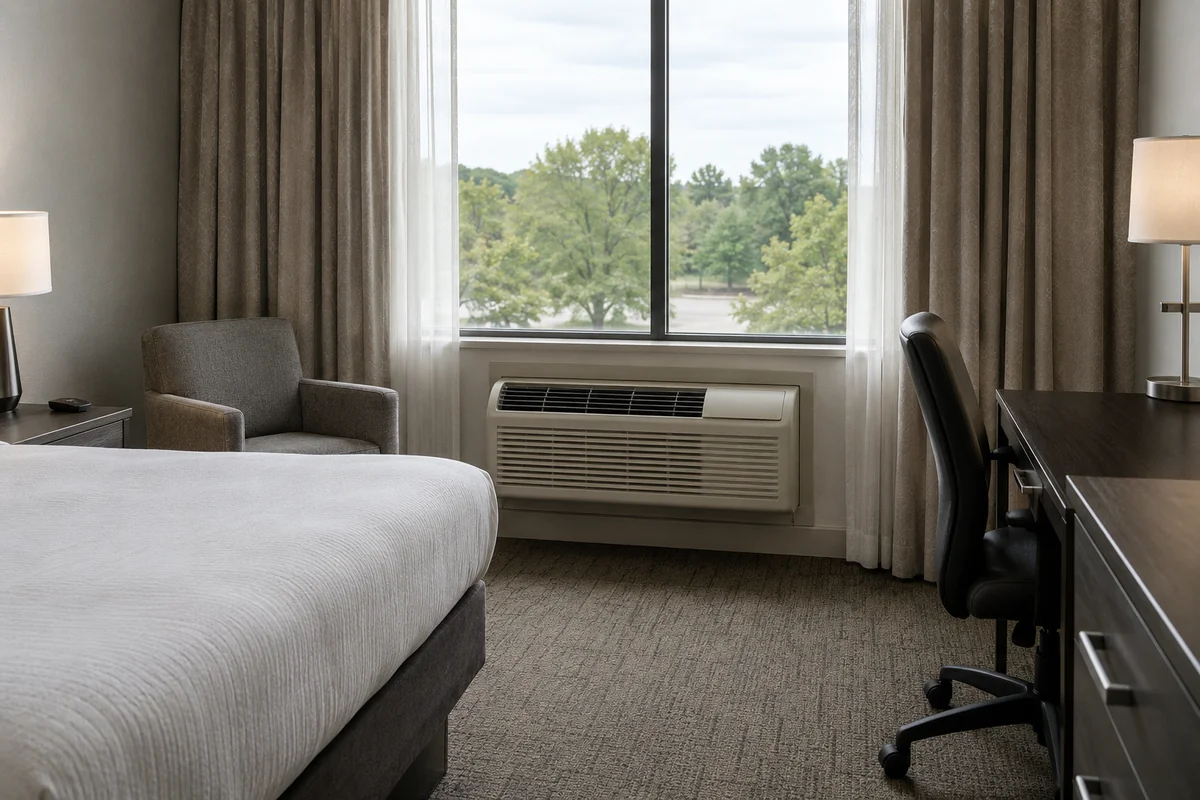
The single most common culprit in guest rooms is the packaged terminal air conditioner, or PTAC, the through wall unit under the window. PTACs remove humidity as they cool, and that condensate has to drain. When the drain pan clogs, the unit is undersized or oversized for the room, or filters and coils go unserviced, moisture lingers inside the unit and in the wall cavity behind it. Guests then report a musty smell that seems to come from the air conditioner, because it does. Regular PTAC maintenance, clear drain lines, and correct sizing are among the most effective ways to keep guest room mold from starting.
- Clogged or sloped PTAC drain pans that let condensate sit
- Undersized or oversized units that cycle poorly and control humidity badly
- Dirty filters and coils that reduce airflow and hold moisture
- Rooms left with HVAC off between stays, so humidity climbs unchecked
- Exterior wall condensation behind furniture and window units
- Bathroom exhaust fans that are weak, blocked, or not run long enough
Guest complaints, reviews, and liability
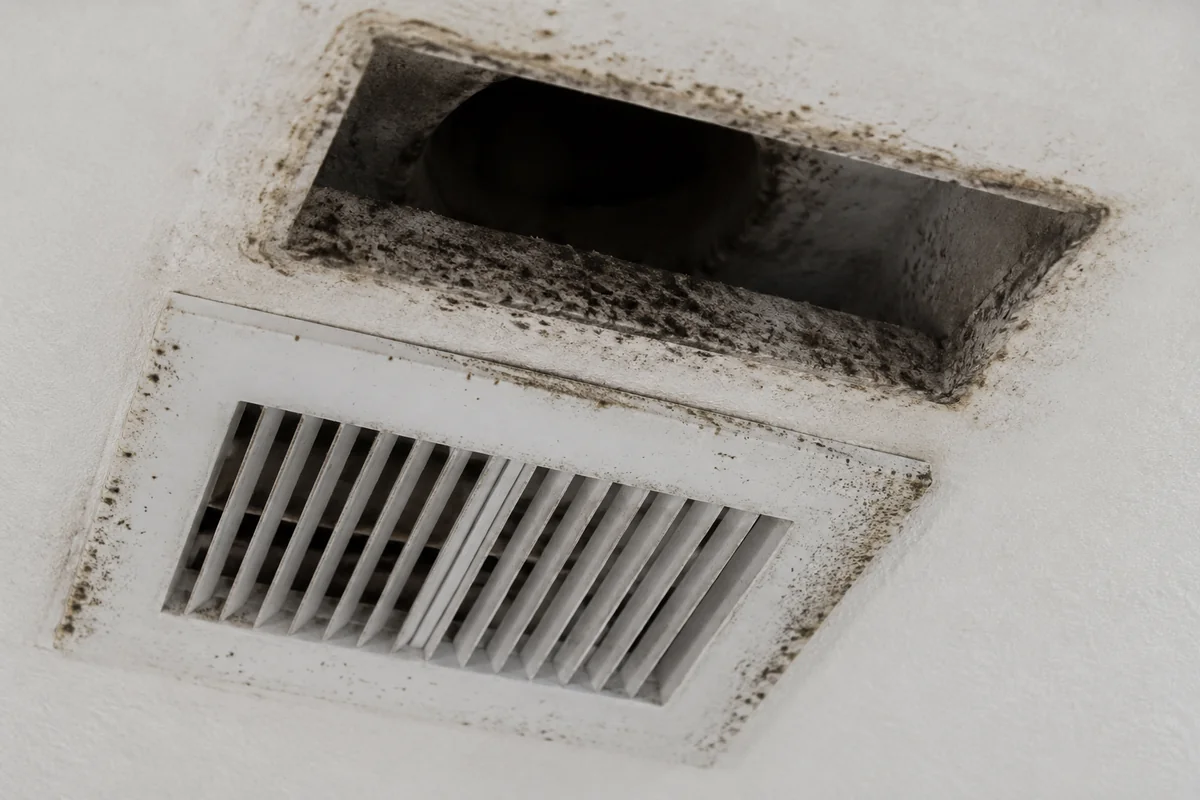
A guest who notices a musty smell or visible growth has several ways to make it your problem, from a front desk complaint to a chargeback to a review that thousands of future guests will read. Some will raise health concerns. The EPA and CDC describe indoor mold in general terms as a possible issue for people with allergies or respiratory sensitivities, which is enough to make guests uneasy and to raise potential liability. How you respond matters as much as the underlying issue. A calm, documented, take it seriously response protects both the guest relationship and the property, while dismissing a complaint tends to escalate it.
Handling affected rooms with minimal disruption
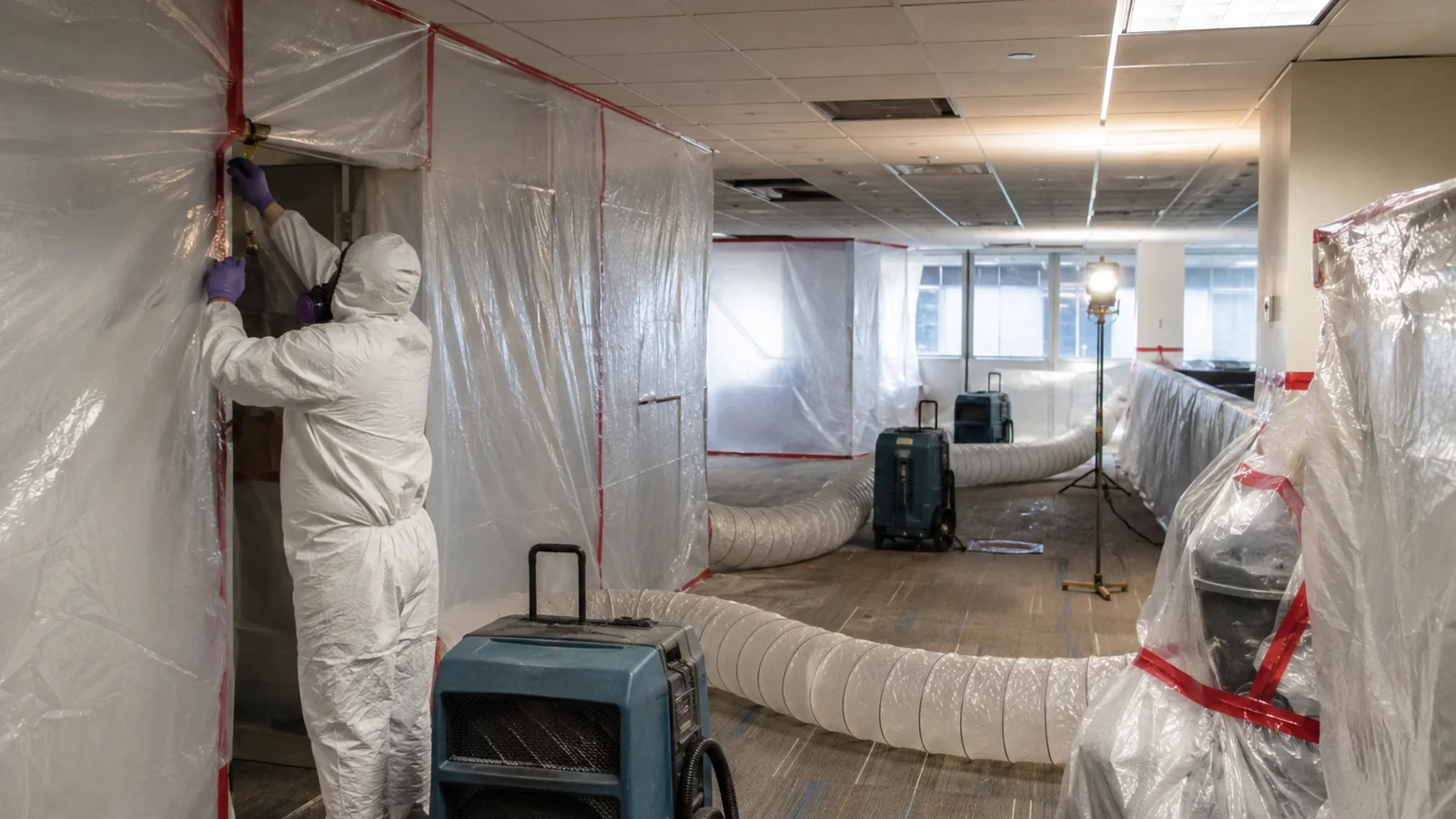
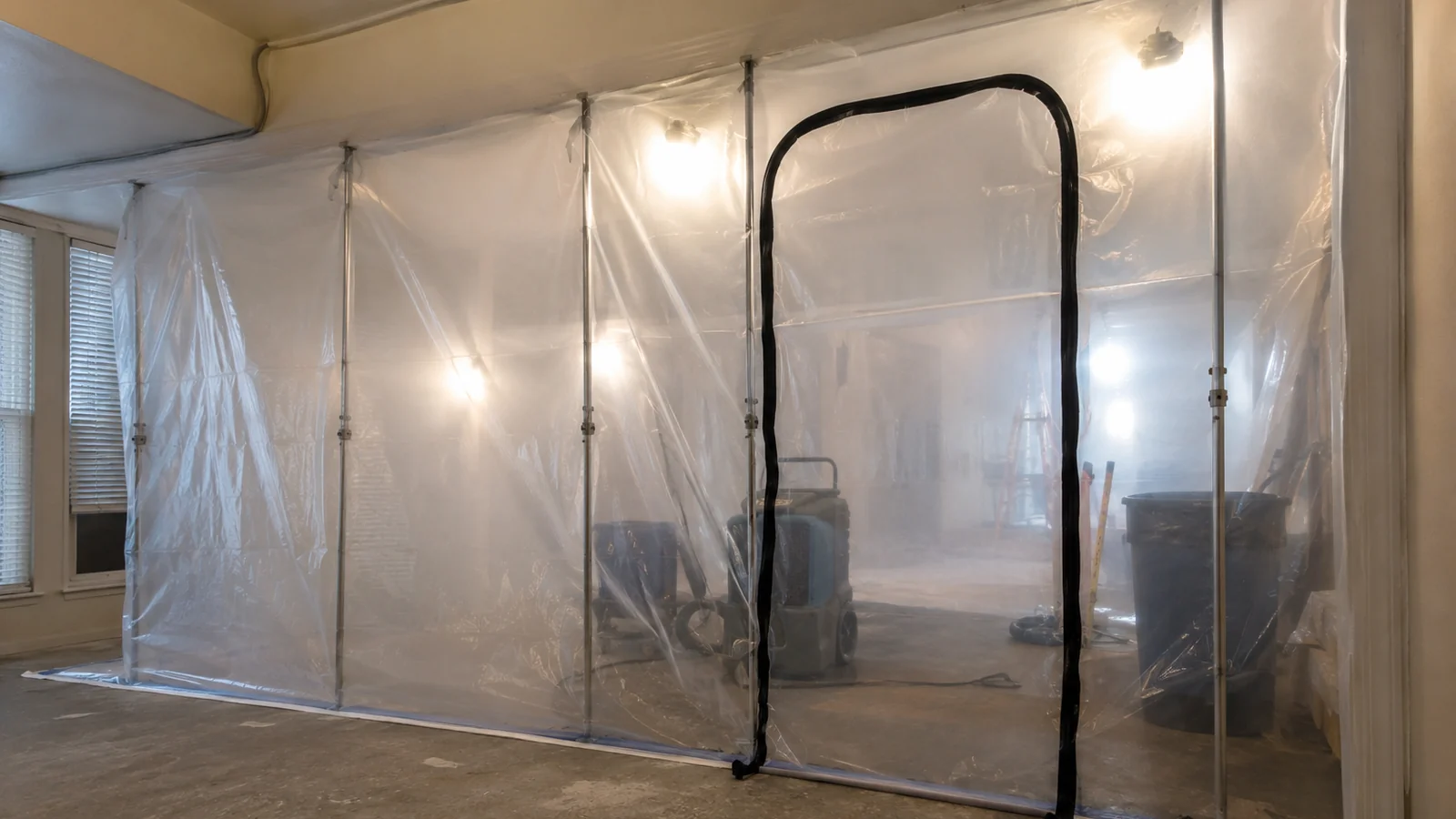
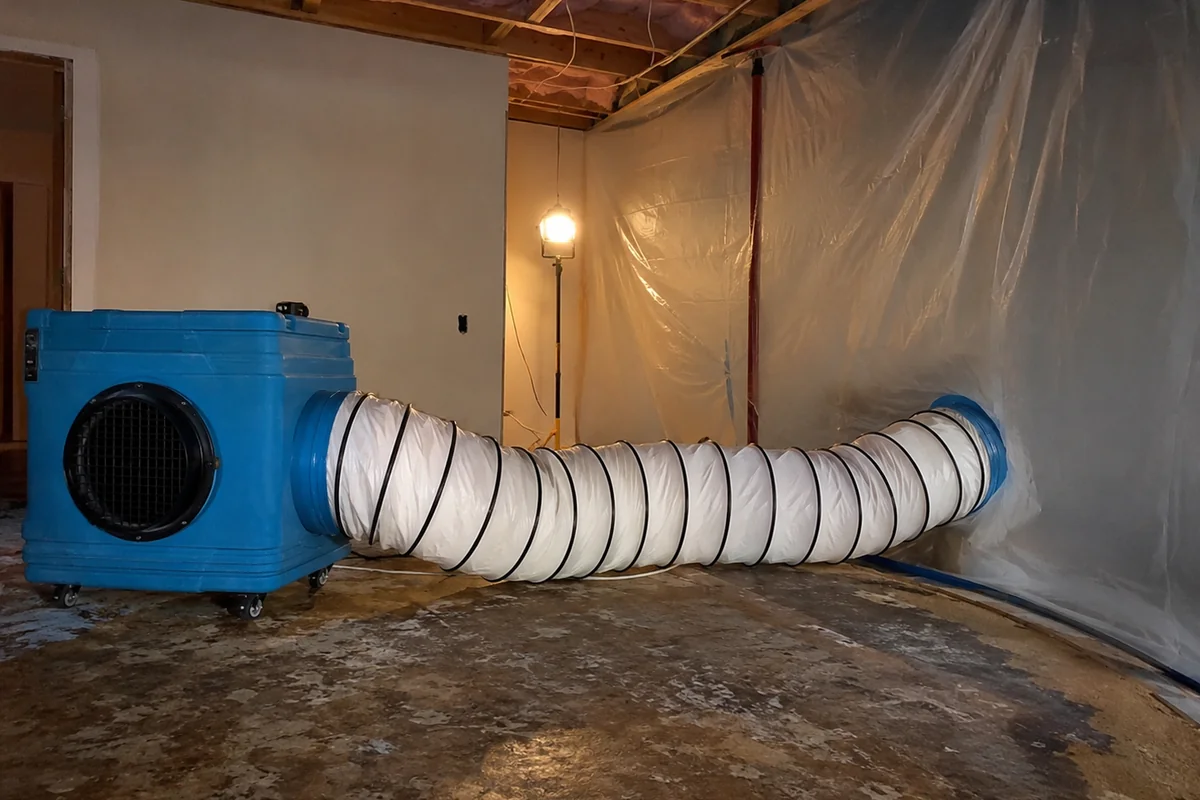
When a room is flagged, take it out of inventory rather than turning it over, and get it assessed. A licensed contractor can contain and address one room or a stack of rooms without shutting the property, working during lower occupancy and coordinating with housekeeping and engineering. The aim is to correct the room properly and confirm it is dry and clean before it goes back into the booking system, so the same complaint does not repeat with the next guest. Rooms are addressed one at a time or in small groups, which keeps the rest of the property selling.
- 1 Move the guest and take the affected room out of inventory
- 2 Document the complaint, the room, and the conditions with photos
- 3 Have a licensed remediation contractor assess the room and the PTAC
- 4 Contain and remediate the room while the property keeps operating
- 5 Repair the moisture source, whether a PTAC, a leak, or humidity control
- 6 Verify the room is clean and dry before returning it to booking
Insurance and documentation
Commercial property coverage handles mold differently depending on the cause and how promptly it was addressed, and hospitality carriers pay close attention to maintenance history. Keeping PTAC service logs, complaint records, and remediation documentation supports both a claim and a liability position if a guest pursues one. For how coverage generally works and what to keep on file, see our overview of commercial mold insurance, and confirm the terms of your own policy with your carrier.
Bringing in licensed pros
Guest room mold sits between HVAC service, building repair, and reputation management, and it is best handled by contractors who work in occupied hospitality settings. This resource does not perform remediation or hold any licenses. It connects hoteliers to the licensed pros in our network, including IICRC trained remediation contractors experienced with hotels. When a room needs attention, you can find a licensed local pro or read our approach to commercial mold remediation.
Frequently asked questions
Is a hotel liable for mold in a guest room?+
It can be, depending on the circumstances, what the property knew, and how it responded. Guests may raise health or comfort concerns, and how those are handled affects both the relationship and any claim. Liability rules vary by state and situation and change over time, so confirm your specific obligations with your own legal counsel rather than relying on a general summary.
How should we handle a guest mold complaint?+
Take it seriously and act promptly. Move the guest to another room, take the affected room out of inventory, document the complaint and conditions with photos, and have a licensed contractor assess it. A calm, documented response protects both the guest relationship and the property. Dismissing a complaint tends to escalate it into a review or a claim.
Why do PTAC units grow mold?+
PTACs pull humidity out of the air as they cool, and that condensate has to drain away. When the drain pan clogs, the unit is sized wrong for the room, or filters and coils are not serviced, moisture lingers inside the unit and the wall behind it, which is exactly where mold takes hold. Regular maintenance and clear drain lines are the main defenses.
How do we prevent mold in guest rooms?+
Control humidity and maintain the equipment. Service PTAC units on a schedule, keep drain lines clear, run bathroom exhaust, and avoid leaving vacant rooms with the HVAC fully off in humid climates. Inspect known trouble spots, fix leaks quickly, and address any musty room before the next guest checks in. Managing moisture is the core of prevention.
Commercial mold, in the field


Mold in a building you manage?
Follow a documented response that protects you from the first complaint through clearance testing.
A single musty room can cost far more in refunds and reviews than a prompt fix ever would, so the properties that manage this well are the ones that maintain their equipment and respond quickly when a guest speaks up. When you need trained help, our network can connect you to licensed remediation contractors who handle mold in hotels and hospitality every day.
A tenant reported mold?
Follow a documented response that protects you, step by step.