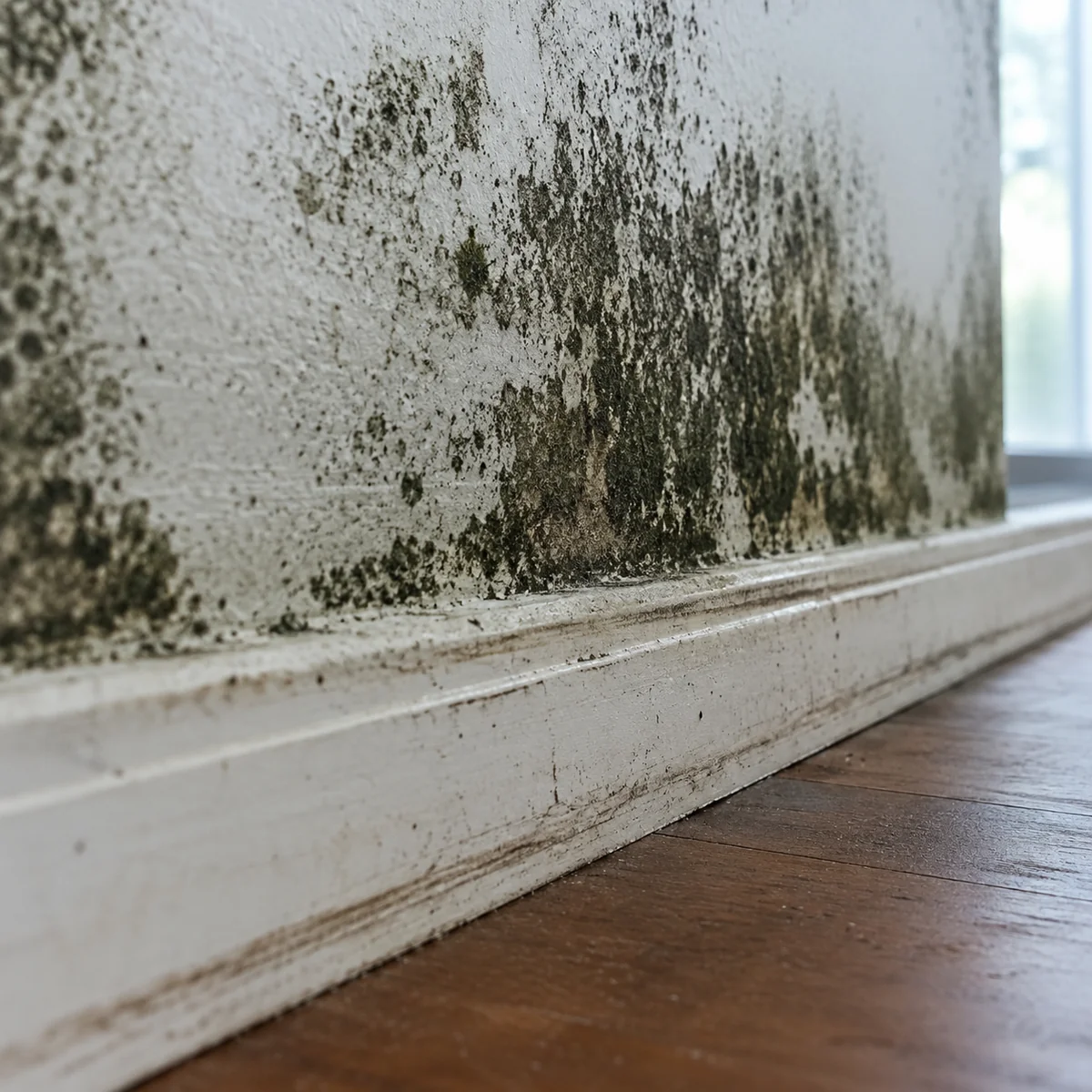
Residential
Is Black Mold Dangerous? What Actually Matters
The color gets the headlines. The amount, the location, and who is breathing it matter far more.
Whether black mold is dangerous is one of the most searched and most misunderstood questions in home health. The honest answer is that black mold can affect your health, but the color on the wall matters far less than three things: how much of it there is, where it is growing, and who is breathing the air nearby. A coin-sized spot on bathroom grout and a wall cavity full of growth after a flood are very different situations, even when they are the same shade of dark.
What people actually mean by black mold
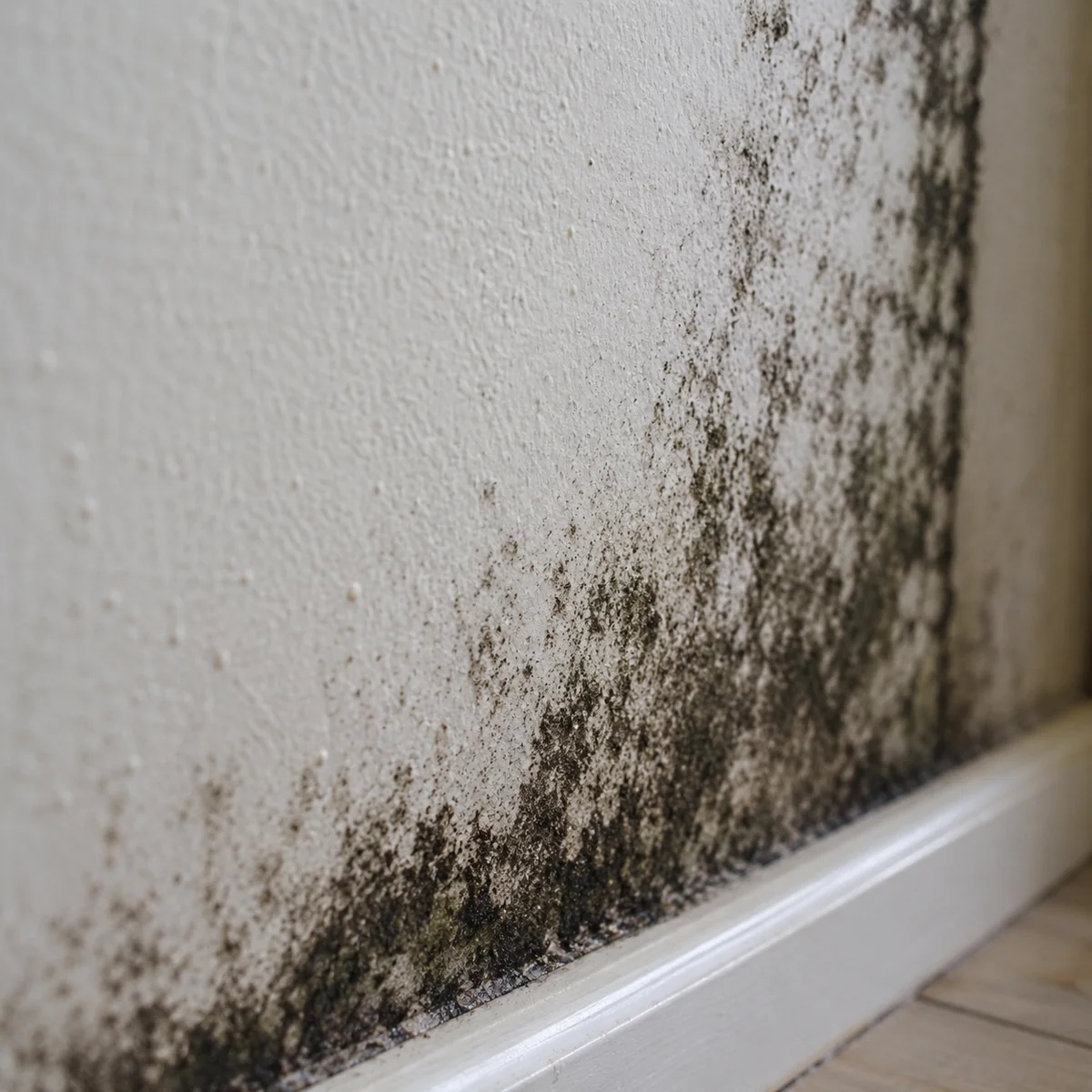
The phrase black mold is a nickname, not a scientific category. Most people use it to describe Stachybotrys chartarum, a dark greenish-black mold that grows on constantly damp, cellulose-rich materials like drywall, cardboard, and ceiling tile. It earned its reputation in the late 1990s after widely covered news stories linked it to serious illness, and the name stuck.
The trouble is that color is a poor way to identify mold. Plenty of common indoor molds, including Cladosporium, Aspergillus, and Alternaria, can look black or dark green on a surface. Some are more allergenic than Stachybotrys, and none of them can be told apart by eye. In practice that means a dark patch on your wall might or might not be the specific mold people worry about, and either way the response is similar. If you are not certain what you are looking at, the is it mold check walks you through the signs in a few taps.
So while it is natural to fixate on the color, the color itself does not tell you how risky the growth is. Everything below applies to dark household mold in general, which is what most people are asking about when they wonder whether black mold is dangerous.
Can black mold actually make you sick?
This is where careful wording matters, because the topic attracts a lot of exaggeration. Health agencies including the Centers for Disease Control, the Environmental Protection Agency, and the World Health Organization agree that living or working in a damp, moldy building is associated with a higher rate of respiratory problems. That link, between indoor dampness and everyday breathing symptoms, is well established.
For most healthy people, the effect of ordinary mold exposure is allergic or irritant in nature. That means a stuffy or runny nose, sneezing, itchy eyes, throat irritation, and sometimes coughing or wheezing. These reactions are uncomfortable and can be persistent, but for a person without underlying lung disease they are usually not dangerous in the way many online stories suggest.
Much of the fear comes from mycotoxins, compounds that Stachybotrys and some other molds can produce. You will find claims tying household mold to memory loss, bleeding in the lungs of infants, and a long list of severe conditions. When expert panels, including reviews by the Institute of Medicine, examined the evidence, they found solid support for the link between damp buildings and common respiratory symptoms, and much weaker support for the dramatic toxic-mold claims at the exposure levels found in typical homes. The mold is worth removing, but the horror stories are largely not backed by the science for normal household exposure.
It helps to picture the response as a spectrum rather than one fixed outcome. A person with no allergies might barely register a small amount of mold, while someone with asthma in the same room could have a genuine flare. Pets can react as well, with coughing, sneezing, or skin irritation. None of this means a dark patch is harmless, only that the honest picture is irritation and allergy for most people, with a smaller group who need to be more careful.
The takeaway from the research
Damp and moldy conditions are a genuine reason to act, mostly because of the respiratory symptoms they cause. The extreme toxic black mold stories, though, are not well supported for everyday home exposure. Fix the moisture and remove the mold, without the panic.
Common symptoms of black mold exposure
Because dark mold usually behaves as an allergen and an irritant, the symptoms tend to center on the airways, eyes, and skin. People most often notice:
- Nasal congestion, a runny nose, or repeated sneezing
- Itchy, watery, or red eyes
- A scratchy or sore throat
- Coughing, wheezing, or a tight chest
- Skin irritation or a rash on contact
- Worsening asthma in people who already have it
One useful clue is timing. Mold-related symptoms often ease when you leave the affected space for a while and return when you come back, which helps separate them from a cold or general seasonal allergies. For a closer look, the guide to mold exposure symptoms covers how they present and when it is worth seeing a doctor.
Who is most at risk
The same amount of mold does not affect everyone equally. Some people are noticeably more sensitive, and for them even a modest amount of growth deserves a quicker response.
- Infants and young children
- Older adults
- People with asthma, COPD, or other chronic lung conditions
- People with significant allergies
- Anyone with a weakened immune system, such as during chemotherapy or after a transplant
For people in these groups, mold exposure is more likely to trigger real breathing difficulty, and in those who are severely immunocompromised there is a small risk of fungal infection. If someone in your home fits one of these categories and has symptoms you suspect are tied to mold, it is worth involving their doctor rather than waiting to see whether it clears on its own.
Two questions come up again and again. Parents ask whether black mold is dangerous for babies, and the honest answer is that infants have developing airways and can be more reactive, so a damp, moldy nursery is worth handling promptly, even though the severe infant lung claims that circulated years ago were not supported by later evidence. People also ask about pregnancy. There is no strong evidence that ordinary household mold harms a pregnancy, but the general advice to reduce exposure and fix the dampness still applies.
Black mold in the usual trouble spots
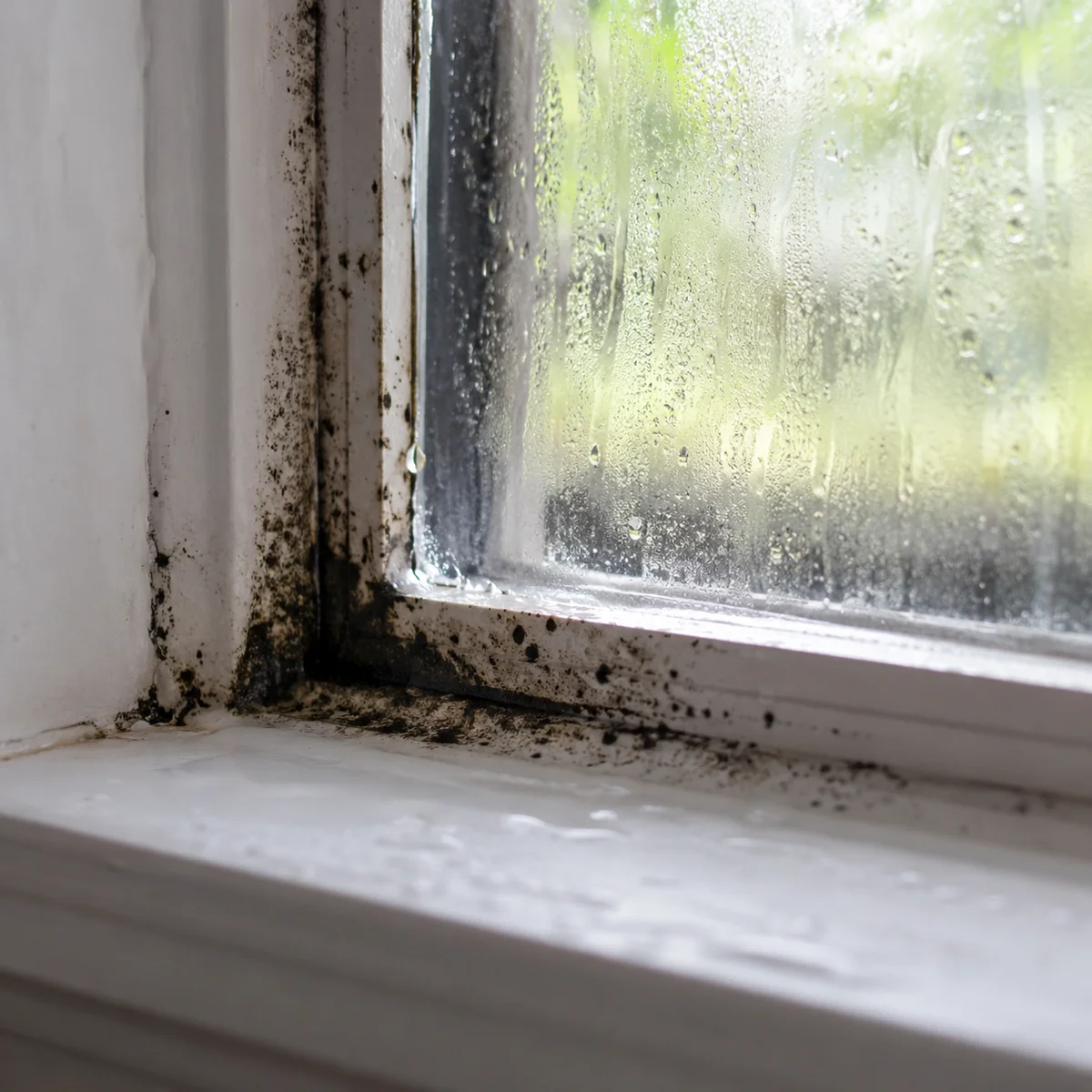
Because dark mold follows moisture, it appears in predictable places. Bathrooms collect steam, basements and crawl spaces trap ground moisture, attics suffer from roof leaks and poor ventilation, and windows gather condensation in cold weather. Heating and cooling systems can carry spores from a single damp spot throughout a building.
If your growth is in one of these areas, the location usually points straight to the moisture source. There are focused guides for mold in the bathroom, the basement, the attic, on windows, and in HVAC and ducts, each with the causes and fixes for that spot.
When black mold is worth worrying about
Deciding how concerned to be comes down to scale and exposure, not the shade of the growth. A small patch in a well-ventilated bathroom that wipes away is a manageable problem. Growth that is spreading, hidden, or tied to your heating and cooling system is a different matter, because it means more spores are moving through the air you breathe.
These signs suggest the situation deserves closer attention:
- The affected area is larger than roughly 10 square feet
- The mold keeps returning after you clean it
- There is a strong musty smell with no obvious source
- The growth is behind walls, under floors, or inside HVAC ducts
- Someone in the home is in a higher-risk group
- Symptoms persist, or clearly improve when people leave the space
If several of these apply, it is a good moment to step back and decide whether this is still a do-it-yourself job. The do I need a pro check asks a few questions and gives you a plain read on which side of the line you are on.
What to do if you find black mold
The instinct to grab a spray bottle and start scrubbing is understandable, but the order of operations matters. Disturbing dry mold sends spores into the air, and cleaning without fixing the moisture simply resets the clock.
- 1 Leave it undisturbed for now, and avoid dry-brushing or vacuuming it, which spreads spores through the room.
- 2 Find and stop the moisture source, whether that is a leak, condensation, or poor ventilation. Mold cannot grow without water.
- 3 Confirm what you are dealing with. If you are unsure it is even mold, run the is it mold check first.
- 4 For a small area on a hard, non-porous surface, clean it safely with gloves, an N95 mask, and good ventilation. The guide on how to get rid of mold walks through each step.
- 5 For larger areas, hidden growth, HVAC involvement, or a sensitive person in the home, bring in a licensed remediation pro who can contain the area and remove affected materials.
- 6 Once it is handled, keep the space dry and keep an eye on it so the same spot does not grow back.
Porous materials that stay wet, like drywall, carpet, and ceiling tile, often have to be removed rather than cleaned, which is one reason larger jobs move quickly out of DIY territory and into work for a licensed contractor.
How professionals handle a bigger black mold problem
When a job is too large or too hidden for a safe do-it-yourself clean, a licensed remediation contractor follows a process built to keep spores from spreading during removal. Knowing the basics helps you recognize good work when you see it.
The area is sealed off with plastic sheeting and put under negative air pressure so spores do not drift into clean rooms, and air scrubbers with HEPA filters run throughout. Contaminated porous materials like drywall and insulation are removed and bagged rather than cleaned, and the moisture source is corrected as part of the work. On larger jobs, independent clearance testing at the end confirms the space is back to normal before it is used again. The walkthrough of how mold remediation works covers each stage, and when you are ready to bring someone in, the guide to finding a licensed pro explains what to check first.
If you rent: black mold and your landlord
Renters have a slightly different path, because fixing the moisture and the mold is often the landlord's responsibility rather than yours. The key is to build a clear, dated record from the start.
Report the problem to your landlord in writing, keep copies of everything, and photograph both the growth and any water source. If the landlord does not act, your options depend on your state and local law. The guides on reporting mold to your landlord, documenting the evidence, and what to do when a landlord will not fix it walk through the steps, and the renter rights tool can generate a dated notice letter for you.
Do bleach and other cleaners kill black mold?
A common question is whether bleach is the answer. On a hard, non-porous surface like tile or glass, detergent and water, or a product labeled for mold, will lift surface growth effectively. Bleach can work on those surfaces too, but it is not required, and its fumes need ventilation and care around fabrics.
Where bleach falls short is on porous materials like drywall and wood. It can fade the surface stain while leaving the mold rooted in the material below, which is exactly why those items are usually removed rather than bleached on larger jobs. The real goal is physical removal followed by a dry surface, not just a lighter color.
Should you test for black mold?
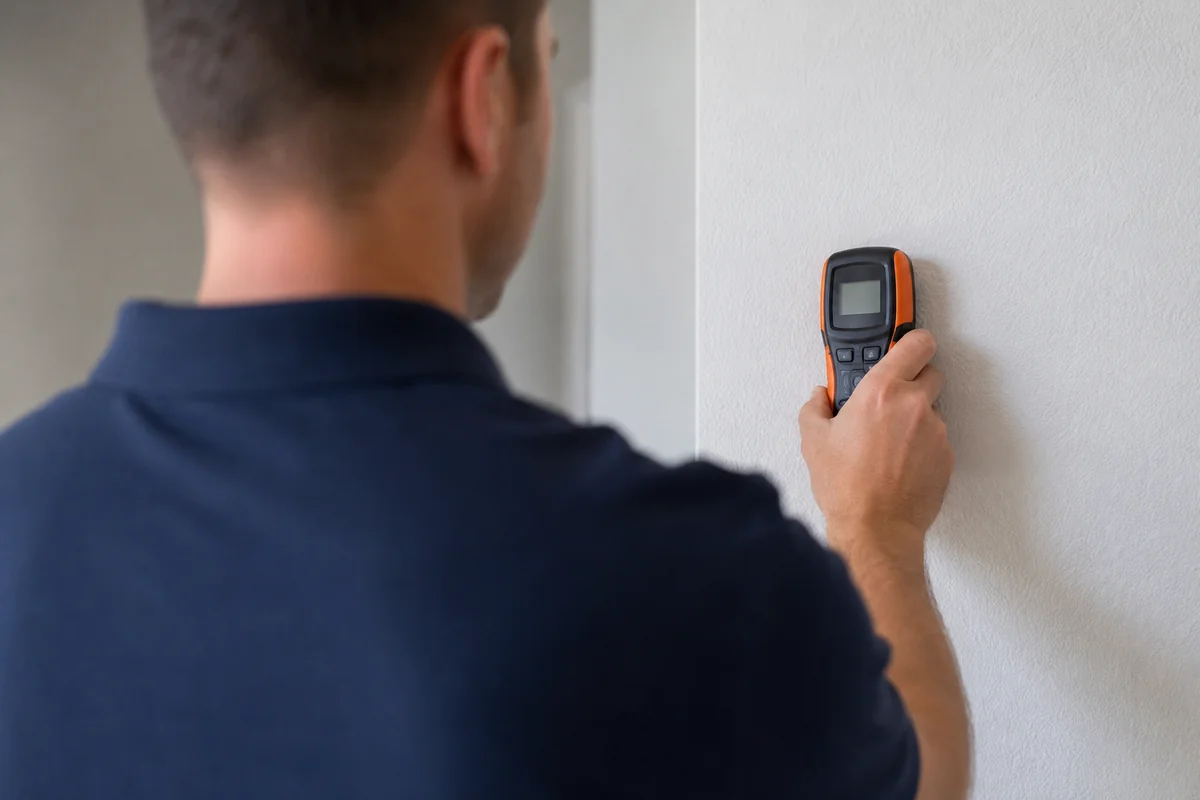
Testing is one of the most oversold parts of the mold world. In most homes a lab result does not change what you should do. If you can see and smell mold, you already know it needs to come out and the moisture needs fixing, and a species name on a report does not change that safe cleanup.
Testing does earn its place in specific situations: a dispute with a landlord or seller, a real estate transaction, unexplained symptoms with no visible source, or clearance testing after a professional remediation to confirm the work was effective. If you are weighing it, the guide on whether to test for mold lays out when it is genuinely useful and when it is money better spent on the cleanup itself.
Preventing black mold from coming back
Since mold is really a moisture problem wearing a disguise, prevention is mostly about controlling water and humidity. The aim is to make your home a place where mold struggles to get a foothold in the first place.
- Keep indoor humidity in a comfortable range, roughly 30 to 50 percent, using a dehumidifier where it is needed
- Fix plumbing and roof leaks quickly rather than letting them linger
- Run exhaust fans in bathrooms and kitchens, and open windows when the weather allows
- Dry wet materials and spills within a day or two, before mold has time to establish
- Address condensation on windows, walls, and cold pipes
Steady moisture control is the single most effective way to keep dark mold from returning. For more on humidity, ventilation, and the trouble spots worth watching, see the guide on how to prevent mold.
Where you live plays a part as well. Warm, humid regions keep indoor moisture high for much of the year, which is why mold tends to be more persistent along the Gulf Coast and the Southeast. If you are curious how your own area compares, the mold-climate index scores each state on how favorable its climate is to mold growth.
Black mold questions
Is all black mold toxic?+
No. Many dark molds are ordinary allergens rather than toxin producers, and even Stachybotrys, the mold usually meant by black mold, does not reliably cause the severe illnesses often described online. The practical response is the same either way: remove it and fix the moisture.
Can I clean black mold myself?+
For a small area on a hard surface, yes, using gloves, an N95 mask, and ventilation. Larger areas, hidden growth, HVAC involvement, or a sensitive person in the home are reasons to bring in a licensed pro instead.
Does black mold always have a smell?+
Not always, but a persistent musty odor with no visible source is a common sign of hidden growth and is worth investigating, especially around bathrooms, basements, and ductwork.
How quickly can black mold grow?+
Given the right moisture, mold can begin to establish on damp materials within a day or two, which is why drying wet areas promptly matters so much after a leak or flood.
Do I have to leave my home if I find black mold?+
Most of the time, no. A small, contained patch does not require leaving. For very large contamination, or when a highly sensitive person is affected, a doctor or remediation professional may advise staying elsewhere while the work is done.
Does insurance cover black mold?+
Sometimes, depending on the cause and your policy. Coverage often hinges on whether the underlying water damage was sudden and accidental. The guide on [whether insurance covers mold](/residential/does-insurance-cover-mold/) explains what to look for.
Is black mold worse than other colors of mold?+
Not necessarily. Color does not reliably indicate how allergenic or risky a mold is, and some lighter molds provoke stronger reactions than dark ones. The amount, the location, and the moisture behind it matter far more than the shade.
Can black mold come back after it is removed?+
Yes, if the moisture that fed it is still there. That is why finding and correcting the water source is the part that actually prevents a return, not the cleaning itself.
Not sure if what you found is black mold?
A quick guided check tells you what you are likely looking at and what to do next.
Black mold is worth taking seriously, but the real danger comes from moisture and the amount of growth, not from the color itself. Find and fix the water source, match the cleanup to the size of the problem, and bring in a licensed pro when the growth is large, hidden, or affecting someone at higher risk.
Not sure if it is even mold?
A quick guided check tells you what you are looking at and what to do next.