Commercial
How to Document a Mold Issue in a Rental
The manager side file that turns a mold complaint into a defensible record, from the first log entry through completion and clearance.
Knowing how to document mold in a rental is what separates a manager who acted reasonably from one who cannot prove it. When a tenant reports a problem, the file you build becomes your record of a fair, prompt response, your support for any insurance claim, and your reference if the matter is later contested. This guide walks through what to capture at each stage, how to organize it, and why doing it the same way across a whole portfolio protects you far more than a strong effort on a single unit.
General guidance, not legal advice
This is general information for property managers, not legal advice. Record retention, disclosure, and notice requirements vary by state and locality. Confirm what your jurisdiction requires with your attorney or counsel, and adjust your documentation practices accordingly.
Why the record is the real protection
In most mold disputes, the argument is rarely about whether mold existed. It is about whether the manager responded reasonably and promptly once they knew. That question is answered almost entirely by the paper trail. A dated file that shows a complaint logged, an inspection performed, a licensed contractor engaged, and the tenant kept informed tells a clear story on its own, long after memories have faded and staff have moved on.
The reverse is also true. A manager who did everything right but kept no record is in a weak position if a claim arises, because there is nothing to point to. Documentation is not busywork layered on top of the real job. It is the part of the job that makes the rest of it defensible. For the response itself, our guide on how to respond to a tenant mold complaint covers the actions, while this guide covers the record those actions should leave behind.
Start the file the moment a complaint arrives
The file begins the instant a tenant raises the issue, not when you first visit the unit. Log the date and time you received the complaint, the unit, who reported it, and a description in the tenant's own words rather than your summary of it. Note how the report arrived, whether by phone, email, text, or a resident portal, and preserve the original message exactly as it came in.
This first entry does the important work of fixing when your duty to respond began. If a phone call started the clock, make a written note of that call the same day so there is a contemporaneous record, not a reconstruction weeks later. The tenant mold complaint response walkthrough shows how this intake step feeds directly into the actions that follow.
Send a written acknowledgement
Acknowledging the complaint in writing serves two purposes at once. It reassures the tenant that the report was received and is being handled, which defuses a lot of frustration before it builds, and it creates a dated record that you responded rather than ignored them. A short message confirming the complaint, stating that you will inspect, and giving a realistic next step is enough.
Keep the acknowledgement factual and measured. Avoid promises you cannot keep and avoid conceding fault before anyone has looked at the unit. The goal is simply to show a good faith, timely response. What you send here becomes the first outbound entry in the communication trail, and it should be saved alongside the tenant's original report.
Capture inspection notes and dated photos
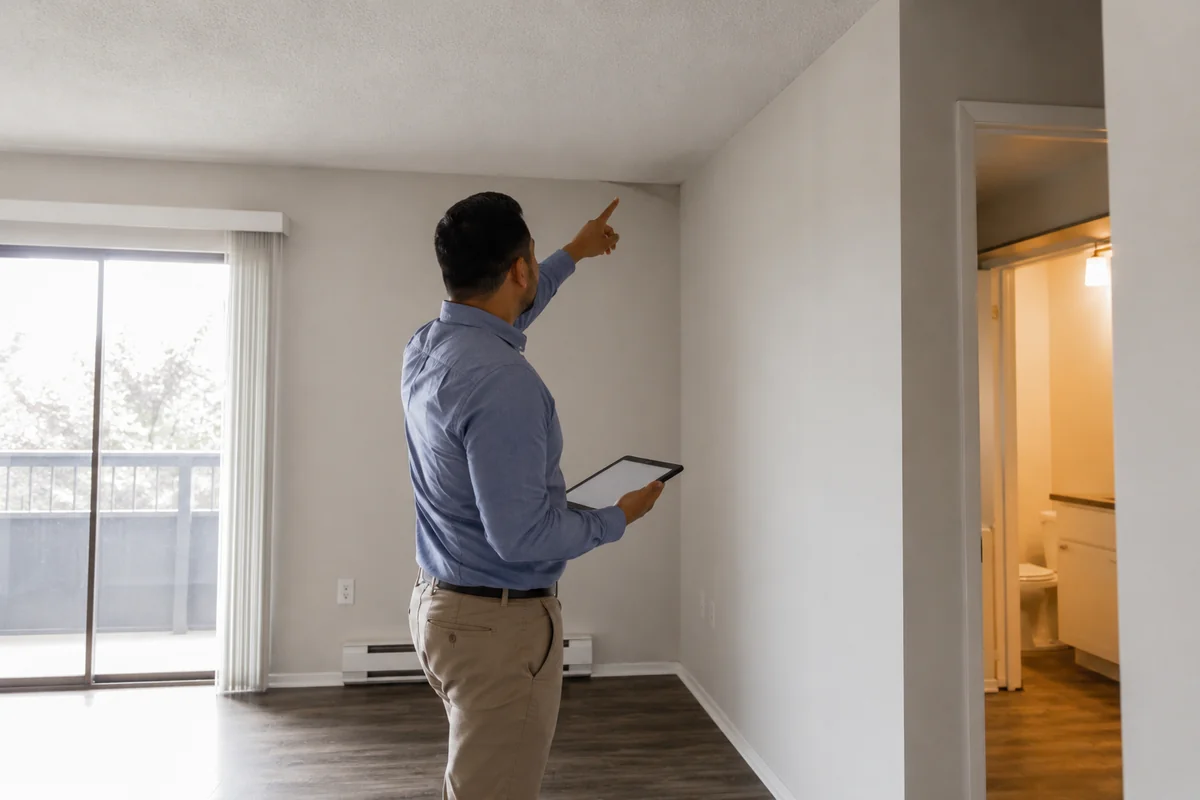
When you inspect, write detailed notes while you are still in the unit rather than from memory afterward. Record what you actually observed, the size and location of any growth, the materials affected, and any moisture source you can identify, since mold generally follows water. Describe conditions plainly and avoid diagnosing severity you are not qualified to judge, since that is the licensed professional's role.
Photograph the affected area from several angles, and include something for scale where it helps, such as a ruler or a common object. Accurate timestamps matter, so confirm your phone or camera has the correct date set. Where a leak or a plumbing fault is visible, photograph that too, because the cause is often as important as the growth when an insurer later reviews the claim.
- The visible growth, close up and from a few feet back to show context
- The suspected moisture source, such as a leak, a window, or a failed seal
- Surrounding materials that may be affected, including flooring and adjacent walls
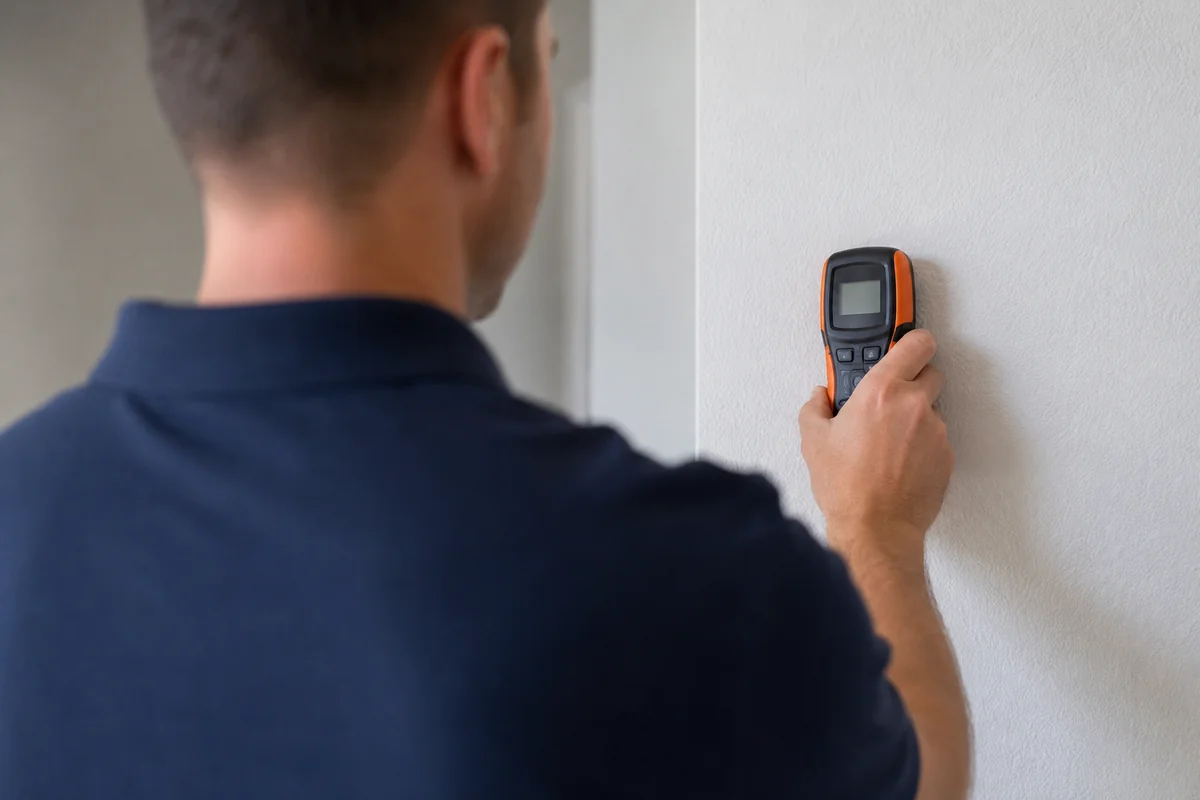
- Any meter readings, such as a moisture meter figure, if you use one
- A wide shot of the room so the location within the unit is clear
Build the standard mold file
A complete rental mold file generally includes the items below. The value of listing them out is that any unit's history can be reconstructed quickly, by any member of your team, without hunting through scattered emails and phones.
- 1 Complaint log: date, time, unit, reporter, and the description in the tenant's words, plus the original message.
- 2 Written acknowledgement: your dated reply confirming receipt and the next step.
- 3 Inspection notes: what you observed, the affected area, and any identified moisture source.
- 4 Dated photos: before, during, and after images with accurate timestamps.
- 5 Contractor scope of work: the licensed remediation contractor's assessment, plan, and any protocol used.
- 6 Hygienist reports: any independent assessment or clearance results from a certified hygienist.
- 7 Clearance and completion records: post work verification, testing results, and written sign off.
- 8 Tenant communications: every acknowledgement, notice of entry, plan, and follow up, in writing.
- 9 Invoices and insurance correspondence: costs, claim references, and carrier communications.
Record the contractor scope and hygienist findings
When you engage a licensed remediation contractor, save their written scope of work, the remediation plan, and any protocol they follow. These documents show that a qualified professional defined and handled the issue, rather than an untrained repair carried out in house. If the situation calls for it, an independent certified hygienist may assess the extent of the growth and, separately, verify the result after the work, so keep both the assessment and the clearance findings in the file.
Separating the assessment from the removal, where an independent hygienist sets the scope and a contractor performs the work, gives the record more weight because the judgment and the cleanup are not the same party. When you need someone to carry out the work, you can find a licensed local pro through the site. The site connects you with those professionals and does not perform remediation itself, so the licenses and certifications in your file always belong to the contractor and the hygienist.
Keep every tenant communication
Save each written exchange with the tenant, including your acknowledgement, notices of entry, the repair plan, progress updates, and your closing follow up. Written communication reduces misunderstandings and gives you a clear record of what was promised and what was delivered. Where a conversation happens by phone, follow it with a short written summary so the substance still lands in the file.
Keeping the tone fair and accurate matters as much as keeping the records. Understanding the tenant's perspective in renter mold rights helps your communications read as a balanced, good faith response, which is exactly how you want the file to look if it is ever reviewed. A record that shows respect and prompt attention is far stronger than one that reads as defensive or dismissive.
How documentation ties into liability
The purpose of all this recordkeeping becomes clear when a dispute or a claim actually lands. A manager's exposure often turns on notice and response: what did you know, when did you know it, and what did you do next. A clean file answers each of those questions with dates and documents rather than recollection, which is the difference between a defensible position and a weak one.
Because the stakes run through your legal duty, it helps to understand where that duty sits before a problem arises. Our guide on landlord mold liability explains the general shape of the responsibility, and the way your lease is written affects it too. Clear mold clauses in leases set expectations for reporting, prevention, and responsibility that your documentation can then track against, so the record and the lease reinforce each other.
The consistency test
Ask whether any manager on your team could open a random unit's file today and reconstruct exactly what happened, in order, with dates. If the answer is no, the gap is in the system, not in that one file. A record is defensible when it is uniform, not when it is heroic on a single case.
Why a consistent portfolio record matters
Documentation is most powerful when it is consistent across every unit and property you manage. A standard intake form, a fixed set of records, and a shared storage location mean any manager on your team handles a complaint the same way, and any file can be produced on demand. That consistency is what makes a record defensible, because it demonstrates a reasonable, uniform practice rather than a one off effort that happened to go well.
Consistency also pays off in the moments that are easy to overlook. Insurance reviews move faster when every claim arrives in the same format. Turnover is smoother when the last unit's history is complete and searchable. And a portfolio wide standard means a mold event at one property does not depend on whether a particular experienced manager happened to be on duty that week.
Documentation at tenant turnover
Turnover is one of the highest value moments to document, because it is when responsibility for a unit's condition can become contested. A dated move out inspection with photos establishes the baseline condition, which protects both parties and prevents an old, resolved issue from resurfacing as a new dispute later. If a prior mold complaint was handled during the tenancy, the clearance record should sit in the file so the unit's history is complete.
The same discipline applies going the other way. A documented move in condition, including photos of areas prone to moisture, gives you a clear reference if a problem appears months later. Our guide on mold at tenant turnover covers the inspection and handoff steps in detail, and the records from that process fold neatly into the standard file described above.
Storing and retaining the file
How you store the file matters almost as much as what goes in it. Many managers keep complaint logs, photos, contractor records, and communications together in property management software so everything for a unit lives in one place and nothing depends on a single person's inbox or phone. Digital storage also keeps photo timestamps intact and makes files easy to produce quickly.
Retention periods vary, and this is one to confirm with counsel rather than guess at, because it depends on your state, your insurance needs, and the relevant limitation periods. As a general practice, many managers keep property files well beyond the end of the tenancy so the record is still available if a claim surfaces later. Whatever period you settle on, apply it uniformly across the portfolio so no unit ends up as an exception.
Frequently asked questions
What records should I keep for a mold issue in a rental?+
Keep the complaint log, your written acknowledgement, inspection notes, dated photos, the contractor scope of work, any independent hygienist assessment and clearance results, all tenant communications, and invoices and insurance correspondence. Together these show a prompt, reasonable, and documented response from report through completion.
How long should I keep mold records?+
Retention periods vary by state and by your insurance and legal needs, so confirm the right timeframe with your attorney or counsel. As a general practice, many managers keep property files well beyond the tenancy to cover potential claims and limitation periods.
Are photos really that important in a mold file?+
Yes. Dated before, during, and after photos are often the most persuasive part of the file because they show the condition, the response, and the result over time. Make sure the timestamps are accurate, and capture the affected area and any moisture source clearly from several angles.
Should tenant communication be in writing?+
Where possible, yes. Written exchanges reduce misunderstandings and give you a clear record of what was promised and delivered. When a conversation happens by phone, follow it with a short written summary so the substance still lands in the file.
Do I need an independent hygienist as well as a contractor?+
Not always, but for larger or contested situations it strengthens the record, because an independent certified hygienist sets the scope and verifies the result while a separate licensed contractor does the removal. Keeping the judgment and the cleanup with different parties makes the file more defensible.
How does good documentation help with insurance?+
Coverage often turns on the cause of the underlying water problem and on a prompt response, both of which your file should capture with dates and photos. A consistent, complete record lets a carrier review the claim faster and supports the facts you are relying on.
Handling a mold report in a building you manage?
Follow a documented response that protects you from the first complaint through completion and clearance.
A disciplined, consistent file is a manager's best evidence of a fair and prompt response, which is why every team should know how to document mold in a rental. Log the complaint the day it arrives, acknowledge it in writing, inspect and photograph, save the contractor and hygienist records, keep every communication, and apply the same standard to every unit so any file can stand on its own.
A tenant reported mold?
Follow a documented response that protects you, step by step.