Residential
Mold Exposure Symptoms: What to Watch For
Signs people report, what the authorities actually say, and when to act on the building rather than guess.
Mold exposure symptoms are usually allergy-like and center on the airways, eyes, and skin, and for most healthy people they are uncomfortable rather than serious. The useful move is to notice the pattern, especially whether the symptoms ease when you leave the space, and then act on the moisture in the building while you raise any health questions with a doctor. This guide is general information, not medical advice.
What mold exposure symptoms usually look like
Health agencies including the Centers for Disease Control and the Environmental Protection Agency describe damp, moldy indoor spaces as linked to everyday respiratory irritation. For most people the reaction is allergic or irritant in nature, which means the body treats mold spores much like it treats pollen or dust. The symptoms tend to cluster around the parts of the body that meet the air first: the nose, the eyes, the throat, and the lungs, with the skin joining in on direct contact.
People most commonly report a familiar set of signs:
- Nasal congestion, a runny nose, or repeated sneezing
- Itchy, watery, or red eyes
- A scratchy or sore throat, or a hoarse voice
- Coughing, wheezing, or a tight feeling in the chest
- Skin irritation, redness, or a rash where mold or dusty air touches the skin
- Headaches or a general sense of stuffiness in a damp room
None of these signs is unique to mold, which is part of why the pattern matters more than any single symptom. If you are still working out whether you even have a mold problem, the is it mold check walks through the visual and moisture clues in a few taps.
Symptoms in the airways and chest
The respiratory signs are the ones people notice most and the ones the health agencies point to with the most confidence. A damp building tends to hold more mold spores and more of the musty compounds that molds give off, and breathing that air over hours and days can leave the nose congested, the throat raw, and the chest tight. A dry cough that lingers in one room, or wheezing that appears indoors and fades outdoors, fits this picture.
For someone with asthma, mold can act as a trigger rather than just an annoyance. That can look like more frequent use of a rescue inhaler, coughing at night, or a flare that does not settle the way it usually does. If you already manage asthma or another lung condition, worsening control indoors is worth mentioning to your doctor and worth treating as a reason to deal with the dampness sooner rather than later.
Symptoms in the eyes, nose, throat, and skin
Above the chest, mold exposure tends to read as classic allergy. The eyes water and itch, the nose runs or blocks, and sneezing comes in bursts, often worse in the morning or after time spent in the affected room. A scratchy throat and mild hoarseness can tag along, since the same irritated mucous membranes run from the nose down into the throat.
Skin reactions are less common but real. Direct contact with moldy material, or handling damp, contaminated items, can leave patches of red, itchy, or irritated skin. This is one reason the cleanup guidance always includes gloves, and why disturbing dry mold without protection is discouraged. If a rash appears alongside the airway symptoms and eases away from the space, mold is a reasonable thing to raise with a doctor.
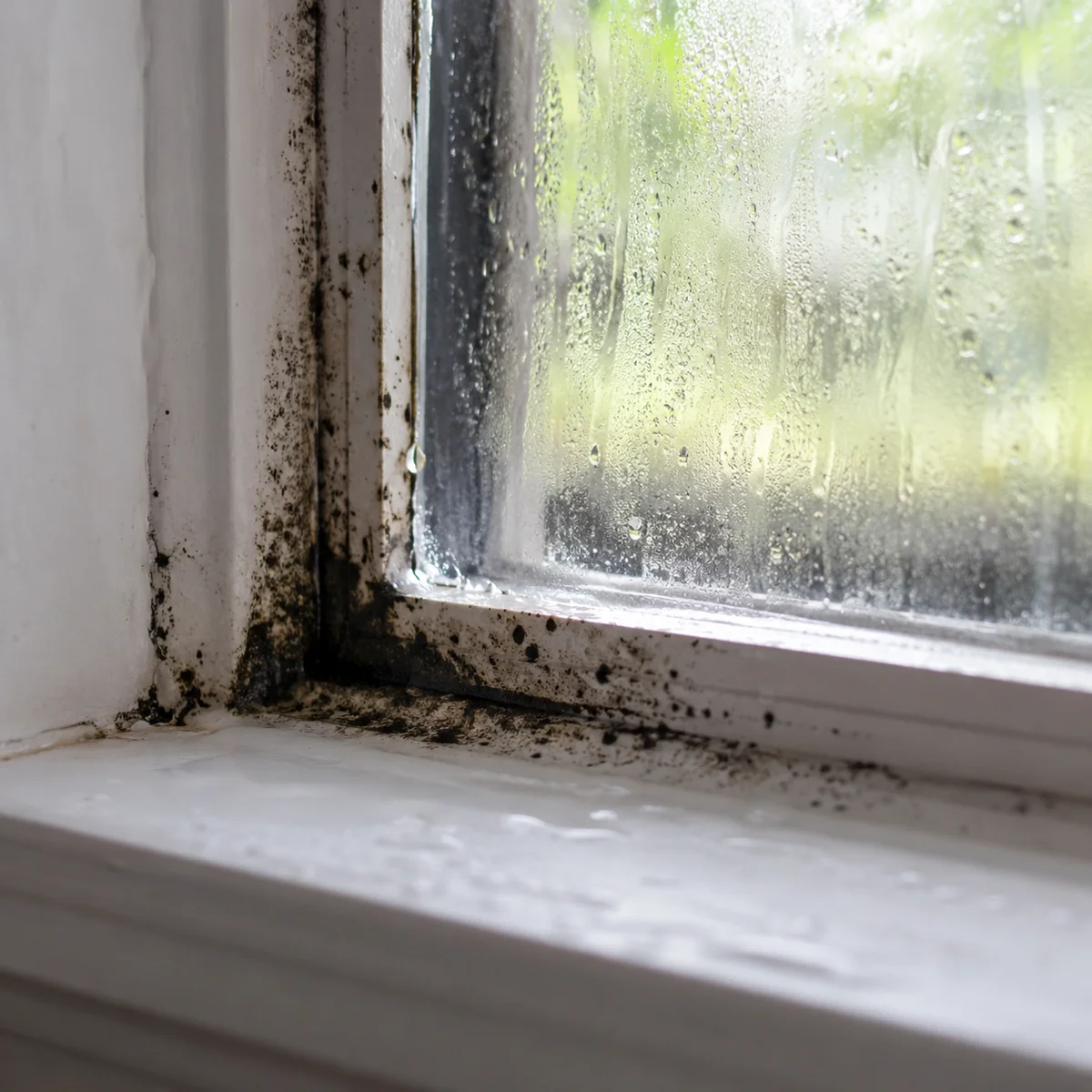
It helps to think of these reactions as a spectrum rather than a fixed outcome. One person in a room might barely register a small amount of mold, while another in the same space sneezes and tears up within minutes. Pets can react as well, with coughing, sneezing, or skin irritation of their own. The variation is normal, and it is why the presence of symptoms in one household member is worth taking seriously even if others feel fine. If you find growth around a window, a bathroom, or a basement, the focused guides for mold on windows, mold in the bathroom, and mold in the basement cover the causes and fixes for each spot.
The timing clue that points at the building
Mold-related symptoms often ease within hours or days of leaving the space and return when you come back. If you feel better at work, on vacation, or at a relative's house and worse at home, that pattern points toward something in the building. It is a signal to address the moisture, not a diagnosis on its own.
The timing clue that separates mold from a cold or allergies
One of the more useful things you can do is pay attention to when the symptoms come and go. A cold follows a fairly predictable arc: it arrives, peaks over a few days, and clears within a week or two, often with a fever or body aches that mold does not cause. Mold-related symptoms, by contrast, tend to track the building. They can drag on for weeks without ever turning into a full illness, and they frequently ease when you spend time away from the damp space.
Seasonal allergies are trickier to separate, since they can also run for weeks. The clue there is location and season. Pollen allergies tend to flare outdoors and follow the calendar, easing when the season passes or after rain. Mold symptoms driven by an indoor source tend to be worst inside the affected building and can persist year round, since indoor mold does not wait for spring. A few questions can help you sort it out:
- Do the symptoms ease noticeably when you leave home for a day or more, then return when you come back?
- Are they worse in a specific room, such as a damp bathroom, basement, or bedroom?
- Do they persist across seasons rather than tracking the pollen calendar?
- Is there a musty smell, past water damage, or visible growth in the space where you feel worse?
If several of these point the same way, the building is worth investigating. A persistent musty odor with no obvious source is a common sign of hidden growth, and the guide on what a mold smell can mean covers how to trace it.
Who tends to be more sensitive
The same amount of mold does not affect everyone equally. Some people react to a level that others would not notice at all, and for them even a modest amount of growth is worth handling promptly.
- Infants and young children, whose airways are still developing
- Older adults
- People with asthma, COPD, or other chronic lung conditions
- People with significant allergies
- Anyone with a weakened immune system, such as during chemotherapy or after a transplant
For people in these groups, mold exposure is more likely to trigger genuine breathing trouble, and for those who are severely immunocompromised there is a small risk of fungal infection that a doctor should weigh in on. If someone at home fits one of these categories and has symptoms you suspect are tied to mold, it is worth involving their doctor rather than waiting to see whether things clear on their own. The question of how much the growth itself matters is covered in the guide on whether black mold is dangerous, which sorts the real risk from the online exaggeration.
When to see a doctor
Most mild, allergy-like symptoms can be managed the way you would handle any allergy, and they often improve once the dampness is fixed. That said, some situations call for a medical opinion rather than a wait-and-see approach. The site connects people with licensed local pros for the building side, but health questions belong with a clinician.
- 1 Note when the symptoms started, which room or building they track with, and whether they ease when you leave.
- 2 Book a doctor's visit if symptoms are persistent, worsening, or interfering with sleep or daily life.
- 3 Seek care sooner if you have asthma or a lung condition and your usual control slips indoors.
- 4 Treat shortness of breath, a high fever, or coughing that brings up discoloration as reasons to seek prompt medical attention.
- 5 Bring the timing pattern and any details about dampness or visible mold to the appointment, since it helps the clinician.
A doctor cannot fix the source of the problem, and no clinic visit will help for long if the damp material stays in place. That is why the two tracks run in parallel: care for the symptoms with a medical professional, and deal with the moisture and growth in the building so the exposure stops.
Acting on the building, not just the symptoms
Since mold is really a moisture problem showing itself, treating the symptoms without addressing the source tends to be a short-lived fix. The lasting relief comes from finding the water, drying it, and removing the growth. Where that lands on the do-it-yourself to professional scale depends on the size and location of the problem.
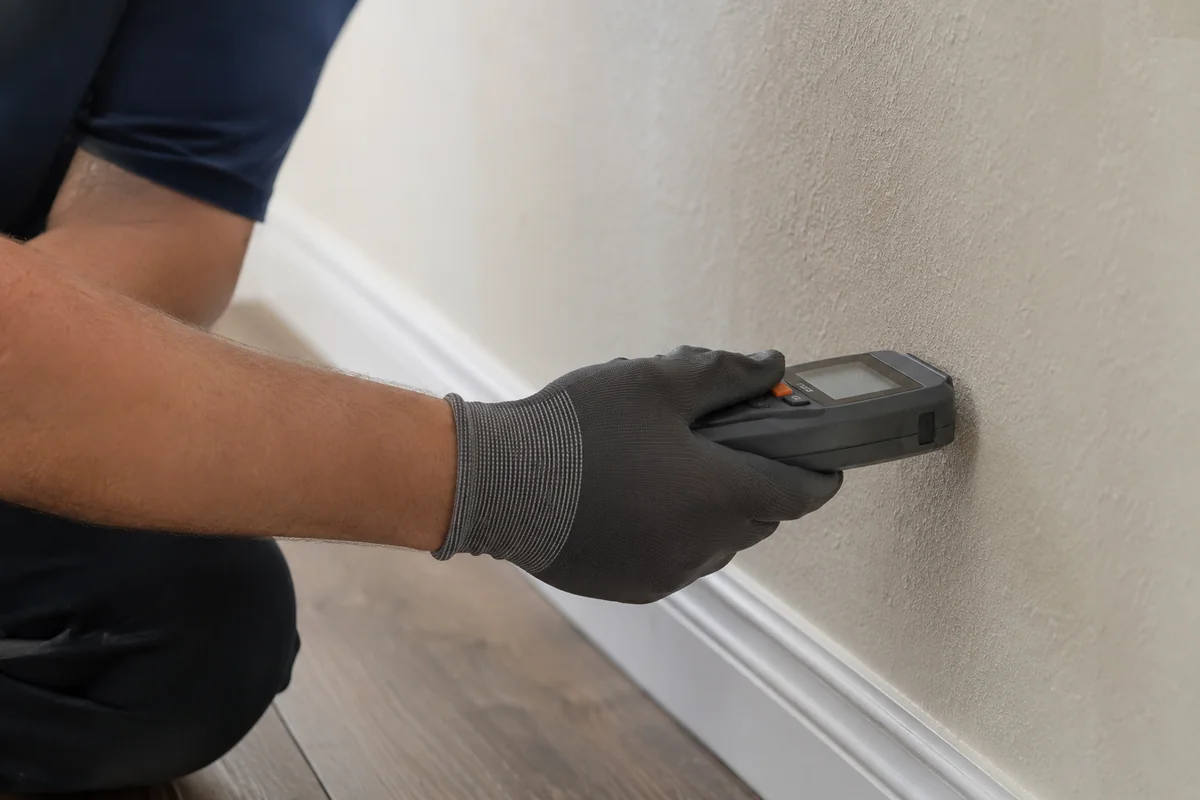
A small patch on a hard, non-porous surface can often be cleaned safely at home with gloves, an N95 mask, and good ventilation, and the guide on how to get rid of mold walks through each step. Larger areas, hidden growth, anything tied to the heating and cooling system, or a sensitive person in the home are reasons to bring in help. The do I need a pro check asks a few questions and gives a plain read on which side of that line you are on.
When the job is beyond a safe home clean, a licensed remediation contractor contains the area, runs HEPA air filtration, removes contaminated porous materials, and corrects the moisture source so the problem does not simply return. If you are ready to bring someone in, the guide to finding a licensed pro explains what to check first.
Mold exposure symptom questions
How long do mold exposure symptoms last?+
For most people the symptoms persist as long as the exposure does, and they often ease within hours or days of leaving the space. Because they track the building rather than an illness cycle, lasting relief usually comes from fixing the dampness and removing the growth.
How can I tell mold symptoms apart from a cold?+
A cold peaks over a few days and clears within a week or two, often with a fever or body aches. Mold symptoms tend to linger, do not usually cause fever, and frequently ease when you spend time away from the affected space, then return when you come back.
Can mold cause a cough or shortness of breath?+
It can. Coughing, wheezing, and a tight chest are among the more common respiratory signs, especially for people with asthma. Ongoing shortness of breath is a reason to see a doctor promptly rather than to wait it out.
Are mold symptoms dangerous?+
For most healthy people they are uncomfortable rather than dangerous, presenting as allergy or irritation. The picture is different for higher-risk groups such as young children, older adults, people with lung disease, and anyone immunocompromised, who should involve a doctor sooner.
Should I see a doctor for mold exposure symptoms?+
See a doctor if symptoms are persistent, worsening, or affecting sleep and daily life, if you have a lung condition that slips out of control indoors, or if you have shortness of breath or a fever. A clinician handles the health side while you address the building.
Does testing for mold help identify symptoms?+
A mold test names a species, but it does not diagnose a person or change the basic response, which is to remove the mold and fix the moisture. Testing earns its place in disputes, real estate transactions, or clearance after remediation. The guide on [whether to test for mold](/residential/should-i-test-for-mold/) covers when it is worthwhile.
Not sure what you are dealing with?
A quick guided check tells you what you are likely looking at and the right next step.
Mold exposure symptoms are worth taking seriously, but they are usually a prompt to act rather than a cause for alarm. Watch the timing, especially whether things ease away from the space, treat any health concerns with a doctor, and deal with the moisture and growth in the building so the exposure stops for good.
Not sure if it is even mold?
A quick guided check tells you what you are looking at and what to do next.