Residential
Mold After Water Damage: The First 48 Hours
The clock starts the moment things get wet. What you do in the first two days decides whether mold ever appears.
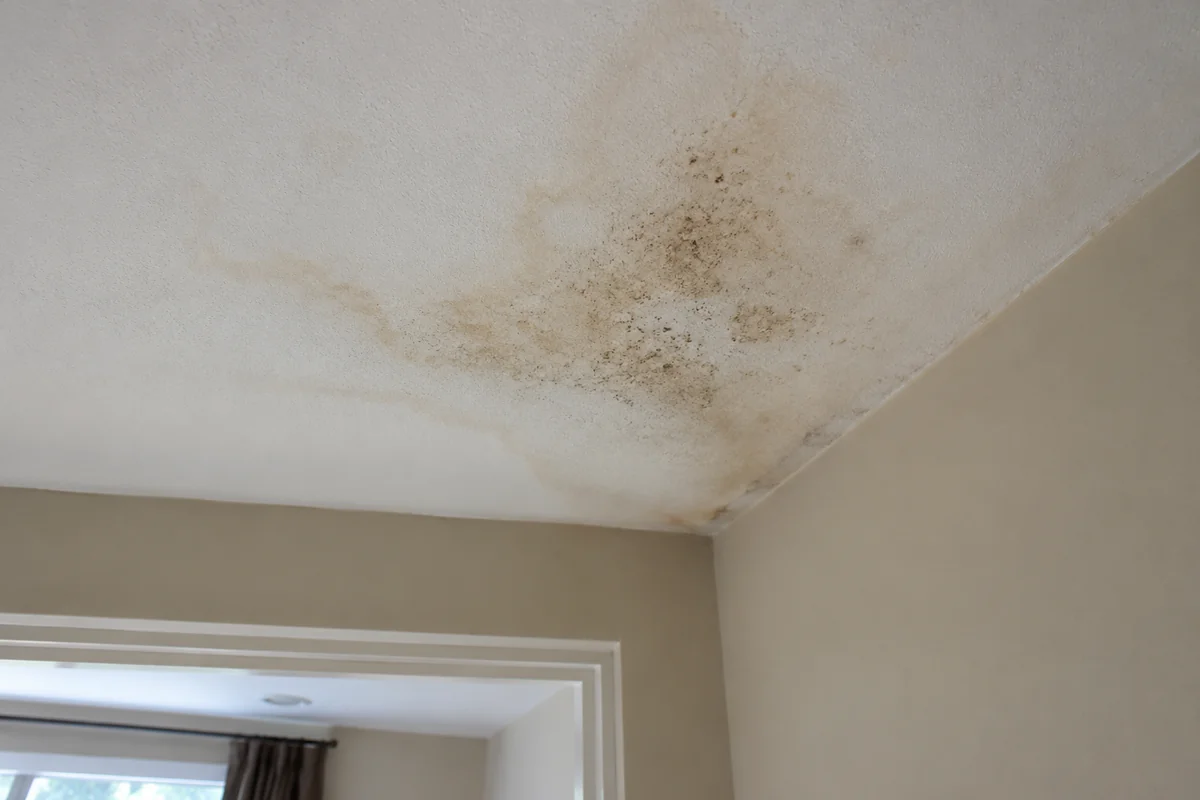
Mold after water damage can begin to grow within 24 to 48 hours, which makes the first two days after a leak or flood the window that decides everything. Water damage is not really a mold problem yet. It becomes one only if wet materials sit long enough for spores to settle in and start feeding, and that happens faster than most people expect. What you do in those first hours, dry things out or wait to see what happens, largely determines whether you are cleaning up water or fighting mold a week later.
Why mold starts so fast after water damage
Mold spores are already in the air of every building. They are harmless while they stay dry, but the moment they land on a damp, food-rich surface like drywall paper, wood, carpet backing, or cardboard, they have everything they need to grow. Water is the only missing ingredient, and a leak or flood supplies it instantly.
Under the right conditions, mold can begin to establish on wet materials within a day or two, which is why guidance from the EPA and the CDC centers on drying wet areas quickly rather than on any particular cleaning product. Warmth speeds it up, so a soaked room in a heated house in summer can show growth sooner than the same room in winter. The practical point is simple: the clock starts the moment things get wet, and mold after water damage is far easier to prevent than to remove.
Do not wait to see if it dries on its own
Materials can feel dry on the surface while staying wet inside a wall or under flooring. That trapped moisture is exactly where mold starts, out of sight, and it is the reason a room that looks fine can still be growing mold behind the baseboards.
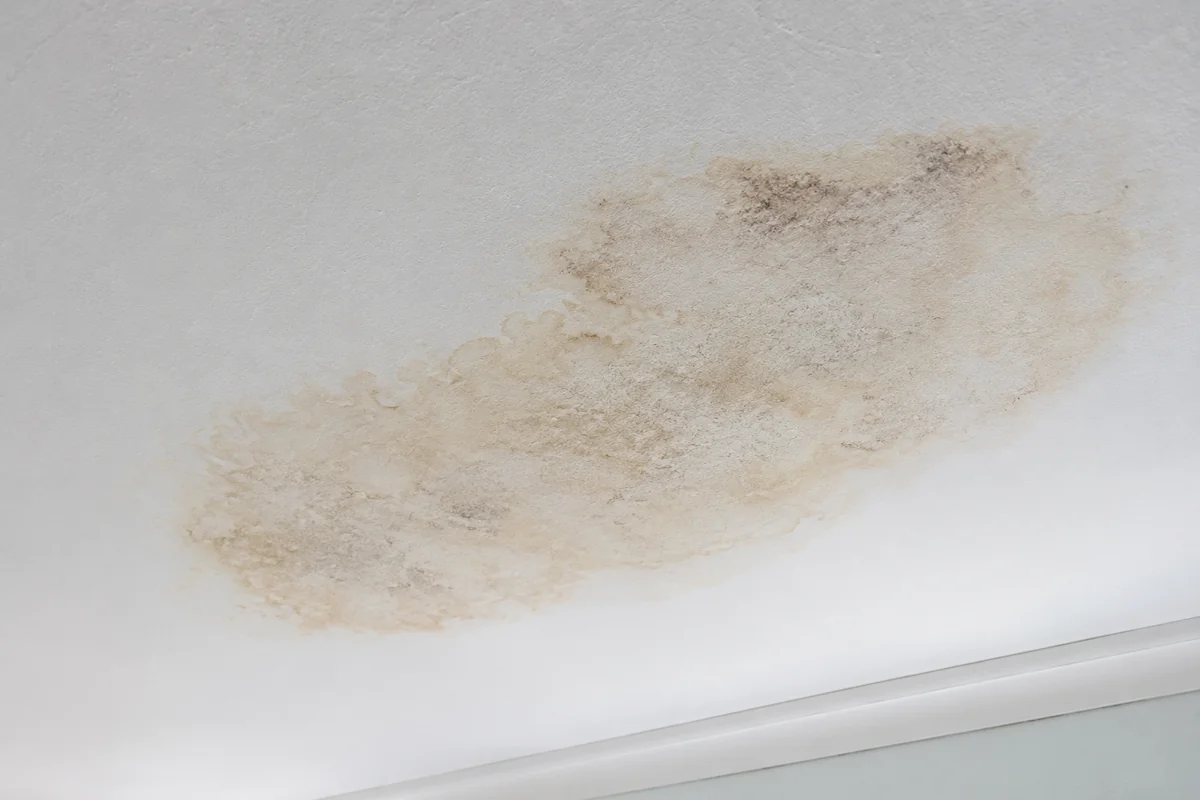
The first 24 to 48 hours: what to do right away
The goal in the first two days is straightforward. Stop the water, get rid of what is soaked, and dry everything that remains as fast as you safely can. Working in that order keeps a manageable situation from turning into a remediation job.
- 1 Stop the water source. Shut off the supply valve for a burst pipe or overflowing fixture, or find and stop the leak. If the water is coming from outside or from a source you cannot reach, focus on protecting the area instead.
- 2 Stay safe around hazards. Do not touch standing water near outlets, appliances, or the electrical panel until power to that area is off. If water contacted the panel or the water may be contaminated, keep out and get a professional in.
- 3 Remove standing water. Use a wet/dry vacuum, mop, or pump for larger volumes, then blot what remains. The sooner the bulk water is gone, the less it soaks into walls and subfloors.
- 4 Pull out soaked porous items. Lift wet rugs, cushions, and anything absorbent off wet floors so they are not trapping moisture against the structure.
- 5 Dry the space aggressively. Open windows if the outdoor air is dry, run fans to move air across every wet surface, and run a dehumidifier around the clock. Air movement plus dehumidification is what actually dries a room, not time alone.
- 6 Document everything as you go. Photograph the damage, the water source, and the wet materials before you remove or discard anything, in case you file an insurance claim later.
If you are not sure whether what you are looking at is already mold or just a water stain, the is this mold check walks you through the signs in a few taps before you decide how to respond.
Drying and airflow: the part that actually stops mold
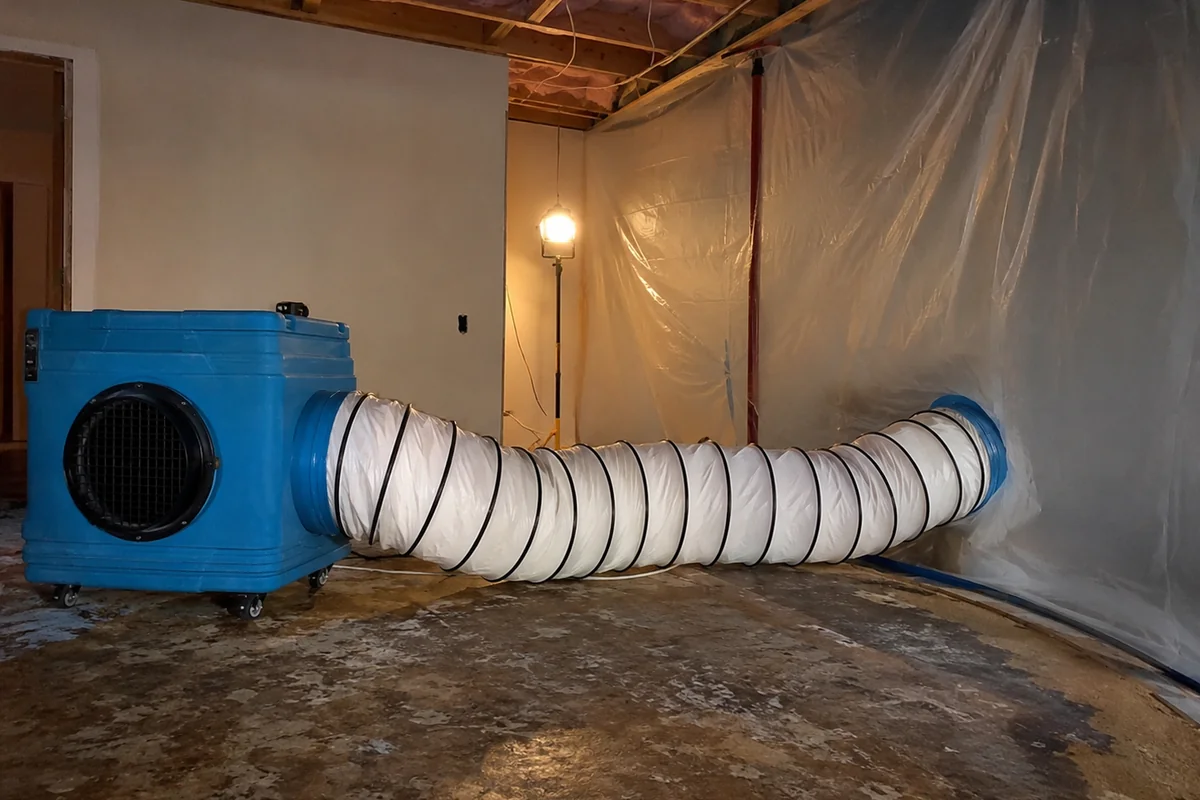
Removing the visible water is only half the job. The moisture that feeds mold is the water soaked into materials and hanging in the air, and getting that out takes deliberate drying, not just an open window. Professionals treat drying as its own stage for a reason.
The two levers that matter are air movement and humidity. Fans push air across wet surfaces so the moisture evaporates instead of sitting still, and a dehumidifier pulls that evaporated moisture out of the room so it does not simply resettle. Running one without the other tends to stall. Aim to keep the space dry and cool while it dries, and give it several days rather than a few hours, since materials release moisture slowly.
- Point fans at wet walls, floors, and into corners, not just at the middle of the room
- Run a dehumidifier continuously and empty it, or plumb it to a drain, so it does not shut off full
- Open interior doors and lift the flaps of soaked carpet so trapped air can move
- Pull baseboards or drill small weep holes low on a wet wall cavity if moisture is trapped behind it, a step a licensed remediation contractor does routinely
- Check progress with a moisture meter if you have one, since surfaces feel dry long before the material inside is
A rule of thumb many pros use is that materials wet for less than about two days, dried thoroughly, usually survive, while materials wet longer than that are more likely to need removal. That is a rough guideline rather than a firm rule, and it is one reason the first 48 hours carry so much weight.
What to save and what to throw out
Not everything can be dried and saved. The deciding factor is how porous a material is and how long it stayed wet. Hard, non-porous surfaces usually clean up fine, while soft, absorbent materials that held water for a day or two often have to go, because moisture and any mold work their way deep inside where cleaning cannot reach.
As a general guide for how the common materials tend to fare:
- Drywall: the paper facing feeds mold readily. A small area dried within a day may be salvageable, but soaked or long-wet drywall is typically cut out and replaced, often a foot or two above the waterline.
- Carpet and pad: carpet exposed to clean water can sometimes be dried and saved if handled fast, but the pad underneath acts like a sponge and is usually discarded. Carpet touched by contaminated water goes out.
- Insulation: fiberglass and cellulose insulation hold water, lose their function when soaked, and are almost always removed rather than dried.
- Solid wood and framing: structural framing and solid wood furniture can often be dried and saved if you act quickly, though they need close monitoring.
- Hard surfaces: tile, glass, metal, sealed concrete, and finished hardwood floors can usually be cleaned and dried, provided water did not sit long or seep beneath them.
- Paper, cardboard, and upholstery: highly absorbent and hard to dry safely, so heavily soaked items are generally discarded.
When in doubt, the age of the water matters as much as the material. Something soaked for six hours and dried is a very different case from the same item soaked for three days. If the affected area of any single material is large, that is one of the signals it is time to bring in help rather than sort it yourself.
Clean, gray, and black water: why the source changes everything
Water damage is not all the same, and the biggest factor is what the water carries. The restoration industry sorts it into three categories, and the category changes both what you can save and whether the cleanup is safe to do yourself.
- Clean water (Category 1): from a broken supply line, an overflowing sink, or rainwater. It starts out sanitary, so more materials can be dried and saved, though clean water left sitting degrades over time.
- Gray water (Category 2): from a dishwasher, washing machine, or a leaking aquarium, carrying some contamination. It can cause illness on contact, and soft porous materials it touches are usually removed.
- Black water (Category 3): from sewage, a toilet overflow beyond the bowl trap, or floodwater from outside. It is grossly contaminated and a genuine health hazard. Porous materials it touches, including carpet, drywall, and insulation, are discarded, and cleanup calls for a licensed contractor with proper protection.
One important note is that category can worsen with time. Clean water that sits for a day or two, or migrates through dirty building materials, can degrade into gray water. That is another reason speed matters. The longer water sits, the fewer things you can keep and the more caution the cleanup demands.
When the water is not clean, treat it as a health issue
Gray and black water can carry bacteria and other contaminants. If sewage or outside floodwater is involved, keep children and anyone with a weakened immune system away from the area, wear protection, and lean toward a licensed remediation contractor rather than a do-it-yourself cleanup.
Do it yourself or call a licensed pro?
Plenty of small water events are well within reach of a careful homeowner. A clean-water leak caught quickly, dried within a day, and covering a small area is often a do-it-yourself job. The situation shifts once the water is dirty, the area is large, the moisture reached inside walls or under floors, or mold has already appeared.
These are the signs it is worth bringing in a licensed remediation contractor rather than handling it alone:
- The water was gray or black, or came from sewage or outside flooding
- A large area is affected, or water spread across more than one room
- Water soaked into wall cavities, under flooring, or into the ceiling
- Visible mold has already started, or there is a strong musty smell
- The materials involved are hard to dry, like insulation inside a finished wall
- Someone in the home has asthma, allergies, or a weakened immune system
If several of these apply, the do I need a pro triage asks a few plain questions and gives you an honest read on which side of the line you are on. For the small jobs that stay on the DIY side, the guide on how to get rid of mold covers safe cleanup step by step, and the mold removal cost estimator gives realistic local ranges if the job turns out to be bigger than it looked.
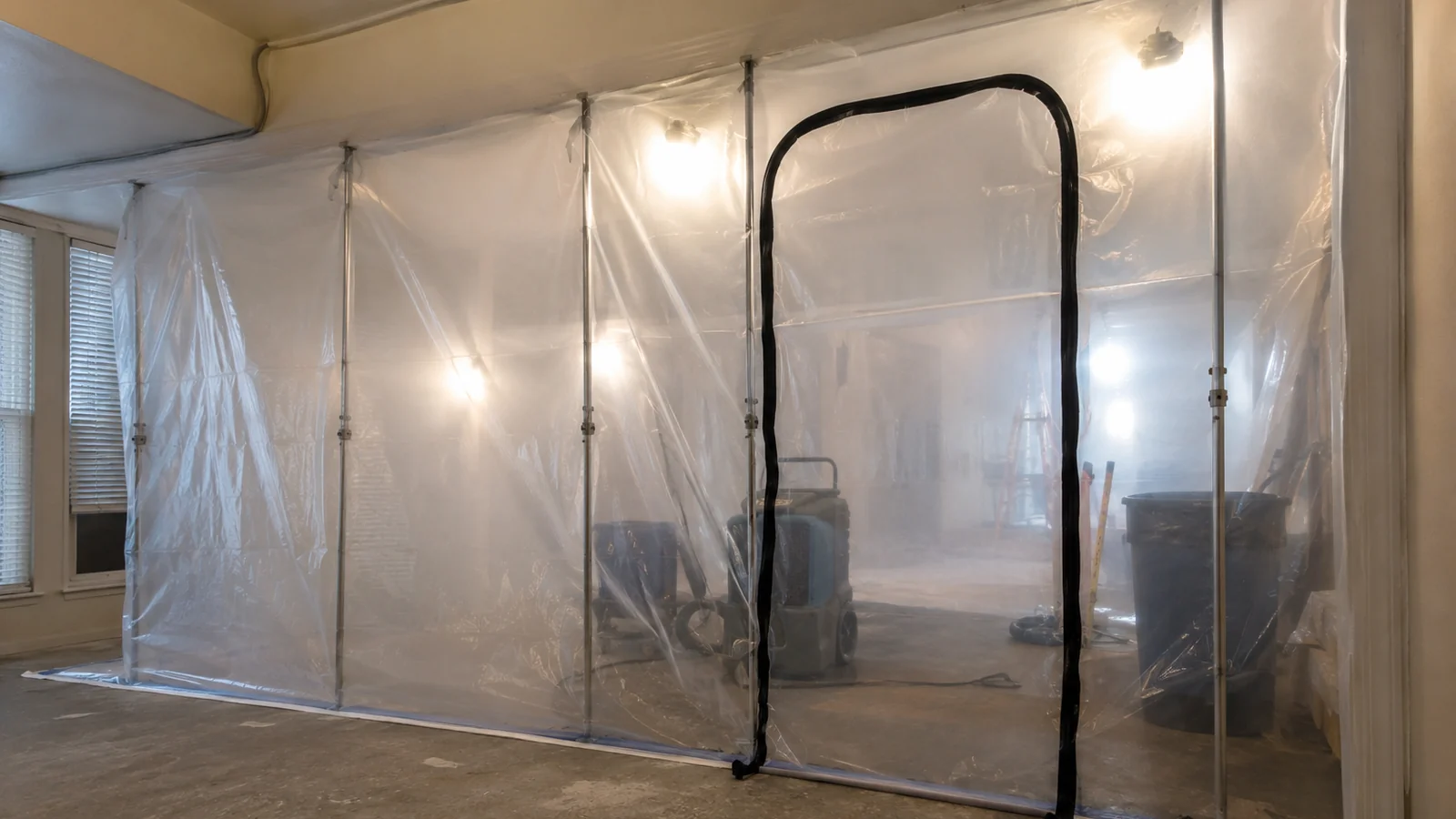
When a job does move into professional territory, it helps to know what good work looks like. A licensed contractor seals off the area, dries it with commercial equipment, removes materials that cannot be saved, and corrects the moisture source. The walkthrough of how mold remediation works covers each stage, and the guide to finding a licensed pro explains what to check before you hire.
Water damage in the basement and other trouble spots
Where the water lands changes the risk. Basements are the classic problem, because they sit below grade, collect water that has nowhere lower to go, and often stay humid and poorly ventilated afterward, which is ideal for mold. Water that reaches a finished basement can soak drywall, carpet, and stored belongings all at once.
If your water damage is in the basement, the focused guide on mold in the basement covers drying a below-grade space and the moisture problems that tend to linger there. Water that travels can also end up in the crawlspace, behind kitchen or bathroom fixtures, or inside the HVAC system, where it spreads spores as the air handler runs. Correcting the underlying moisture, not just the visible water, is what keeps mold from returning, which is the heart of how to prevent mold for the long term.
The insurance angle
Whether a homeowners policy helps with water damage and any resulting mold usually turns on one question: was the water sudden and accidental, or gradual? A pipe that bursts without warning is the kind of sudden event many policies cover. Damage from a slow leak that went unaddressed, or from a lack of maintenance, is more often excluded. Flooding from outside is generally not covered by a standard policy at all and needs separate flood insurance.
Because coverage often hinges on the cause and on how quickly you responded, the documentation you gather in the first hours matters. Photograph the source and the damage before you clean up, keep receipts for drying equipment and repairs, and report the claim promptly. Acting fast to dry the space is not just good for preventing mold, it also shows you took reasonable steps to limit the loss, which insurers expect. The guide on whether insurance covers mold walks through what to look for in your own policy and how the sudden-versus-gradual line tends to play out.
Common questions about mold after water damage
How fast does mold grow after water damage?+
Given the right moisture and warmth, mold can begin to establish on damp materials within 24 to 48 hours. That is why drying wet areas quickly, rather than waiting to see if they dry on their own, is the single most important step.
Will mold grow if I dry everything within two days?+
Drying thoroughly within the first day or two greatly reduces the chance mold takes hold, which is the whole point of acting fast. The catch is that surfaces feel dry long before the material inside is, so aggressive air movement and dehumidification matter more than surface appearance.
Can I save wet drywall and carpet?+
It depends on how long they were wet and how clean the water was. Drywall dried within a day may survive, but soaked or long-wet drywall is usually cut out. Carpet touched by clean water can sometimes be dried, but the pad underneath is generally discarded, and anything touched by gray or black water goes out.
Is it safe to clean up water damage myself?+
A small area of clean water, caught and dried quickly, is often a reasonable do-it-yourself job with gloves and an N95 mask. Gray or black water, large areas, moisture inside walls, or visible mold are reasons to bring in a licensed remediation contractor instead.
Does homeowners insurance cover mold from water damage?+
Sometimes, and it usually depends on whether the water was sudden and accidental rather than gradual, and on whether it came from inside the home versus outside flooding. Documenting the damage and responding quickly both help. The guide on whether insurance covers mold explains the details.
How long should I run fans and a dehumidifier?+
Plan on several days rather than several hours. Materials release moisture slowly, so keep air moving and the dehumidifier running until the affected materials, not just the surfaces, read dry. A moisture meter helps confirm you are actually done.
Not sure what you are dealing with?
A quick guided check tells you what you are looking at and the right next step.
Acting fast is the whole game, because preventing mold after water damage is far easier and cheaper in the first 48 hours than removing it once it has spread. Stop the water, clear out what is soaked, dry the space with real airflow and dehumidification, and match the response to how dirty the water was and how far it reached. When the job is large, the water was not clean, or mold has already started, a licensed local pro is the safer call.
Not sure if it is even mold?
A quick guided check tells you what you are looking at and what to do next.