Commercial
Commercial Mold Remediation: What the Process Really Involves
Containment, removal, and independent clearance, explained for the person signing off on the work.
Commercial mold remediation is the controlled process of removing mold from a business property, correcting the water problem that fed it, and confirming through independent testing that the space is ready to reoccupy. It looks different from a household cleanup because the buildings are larger, the mechanical systems are more involved, and the work usually has to happen while people keep using the space. This guide walks through how the process actually runs, what drives the cost, and how to choose a contractor you can trust with an occupied building.
How commercial work differs from a residential cleanup
A homeowner can often clean a small patch of mold themselves, live with a little disruption, and move on. A commercial building rarely has that luxury. The affected areas tend to be larger, they sit above suspended ceilings and inside wall cavities, and the air that carries spores usually moves through a shared mechanical system that touches the whole floor. On top of that, a business has staff, customers, tenants, and often a lease or an insurer watching how the situation is handled.
The result is a process that leans much harder on containment, documentation, and independent verification. Where a home cleanup might end when the visible growth is gone, commercial work is not considered finished until an independent check confirms the space meets accepted conditions again. If you want to see how the two compare in general terms, the overview of how mold remediation works is a good place to start, and the commercial section collects the guides written specifically for business property.
Assessment by an independent hygienist
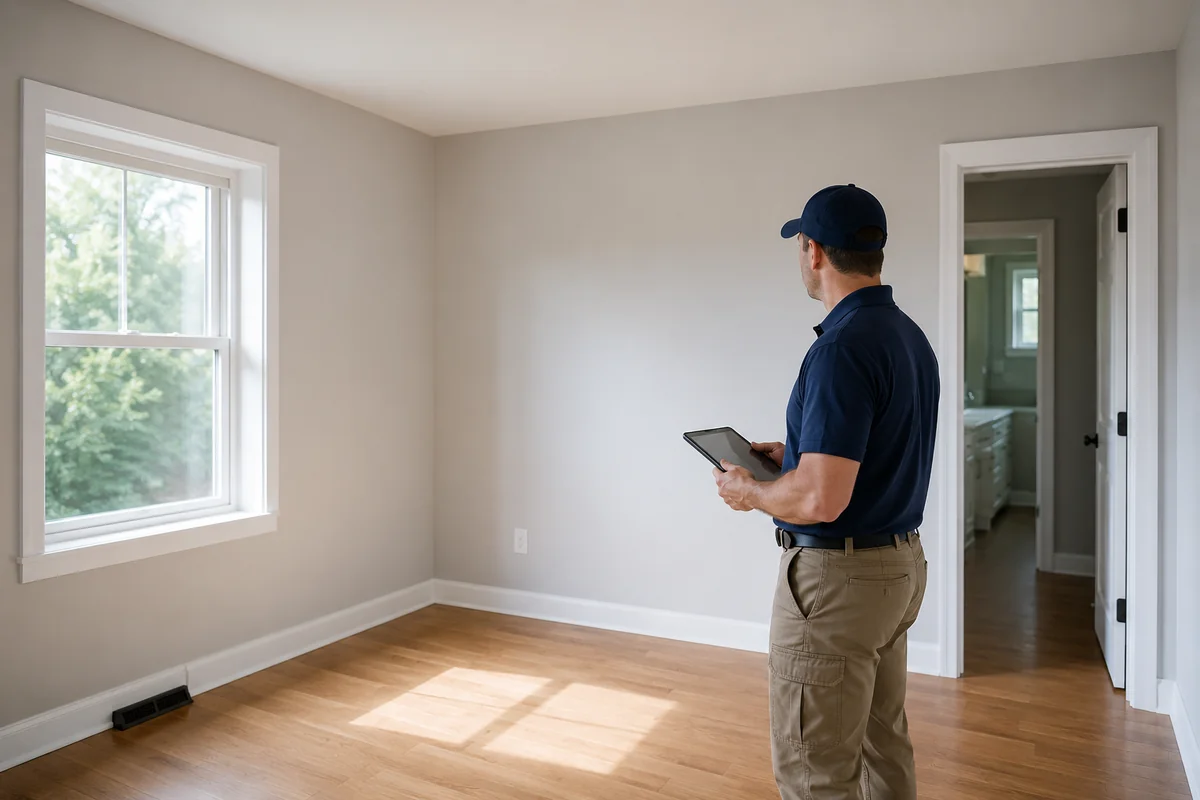
Good commercial mold remediation starts before anyone touches the mold. An independent, certified hygienist inspects the property, maps where the growth is, identifies the moisture source feeding it, and writes a scope of work. Keeping this assessment independent matters: the person judging the size of the problem is not the same person who profits from the removal, which is exactly the arms-length check that owners, tenants, and insurers look for.
That written scope becomes the yardstick for everything that follows. The remediation contractor works to it, and the final clearance test is measured against it. Without a clear scope, it is hard to know whether a contractor did too little or billed for too much. For a broader look at when testing is worth doing, the guide on whether to test for mold explains the logic, and it applies to commercial buildings as much as homes.
Keep assessment and removal separate
The strongest commercial jobs use an independent hygienist for the assessment and the final clearance test, and a separate licensed remediation contractor for the removal. When one firm both defines and grades its own work, the check stops being a check. Attribute the testing and the remediation to the licensed local pros who hold those credentials, and keep the two roles at arm's length.
Containment and negative air pressure
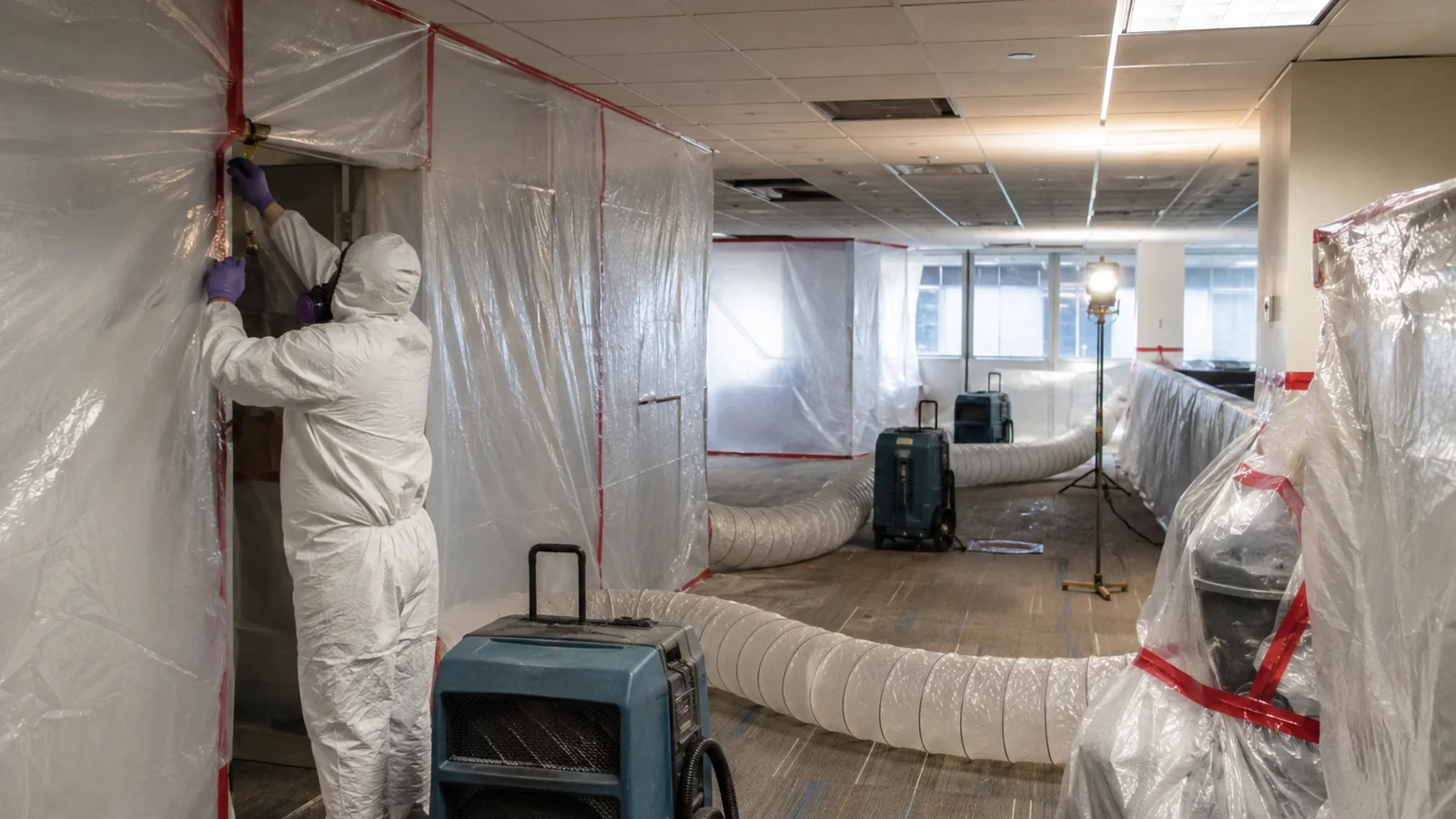
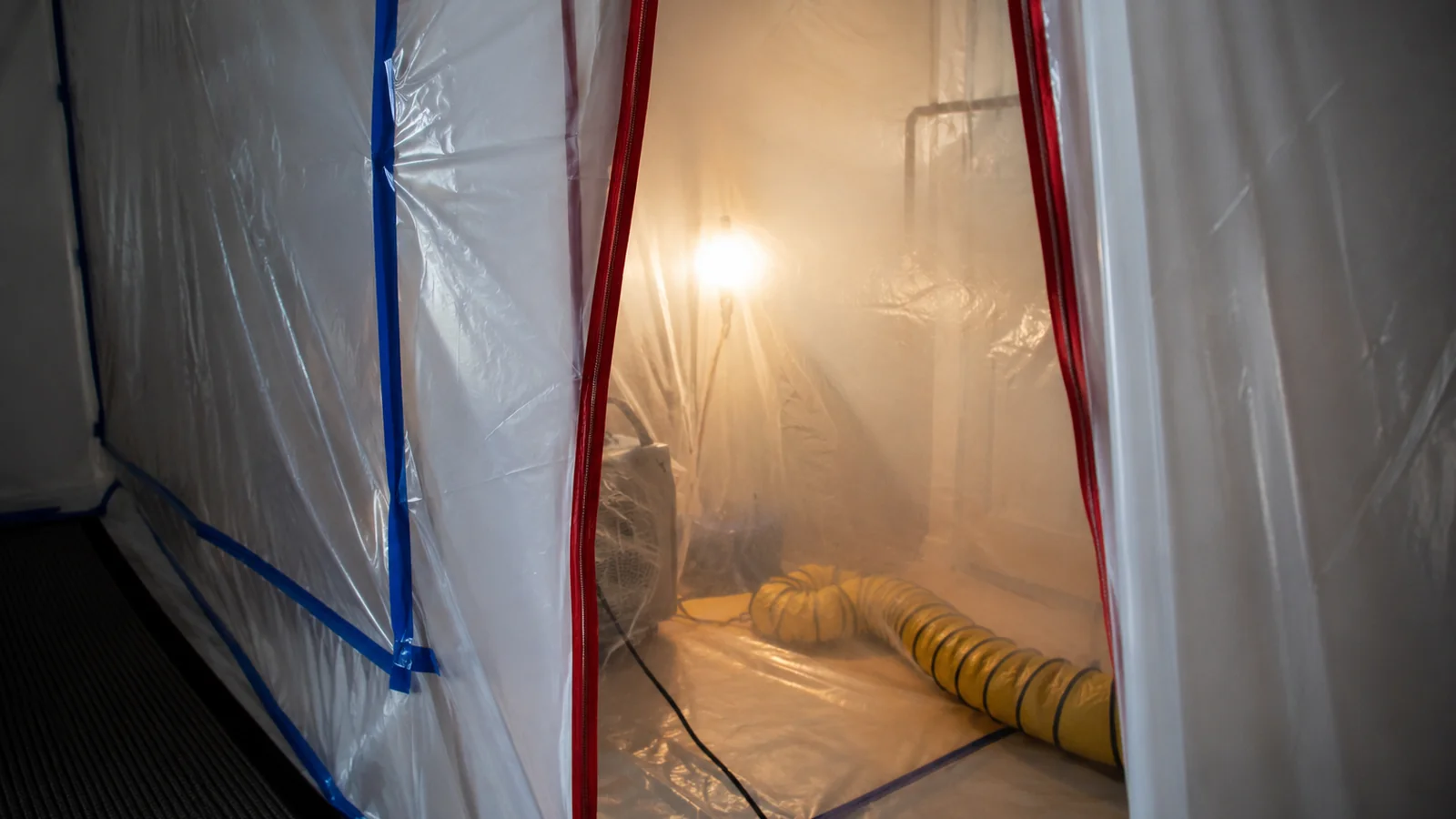
Once the scope is set, the first thing a licensed remediation contractor builds is containment. The work area is sealed off with heavy sheeting so that dust and spores stirred up during removal cannot drift into occupied parts of the building. In a commercial setting this often means isolating a suite, a wing, or a run of ceiling rather than a single room.
Inside that sealed zone, the contractor sets up negative air pressure. Machines pull air out of the containment and exhaust it through filters, so the enclosed space sits at slightly lower pressure than the areas around it. Air then flows into the work zone rather than out of it, which keeps contamination from escaping while doors open and workers move in and out. This is one of the clearest differences from a home cleanup, where containment is often as simple as a plastic sheet and an open window.
HEPA filtration and removing affected materials
Within containment, air scrubbers fitted with HEPA filtration run continuously, capturing fine particles from the air while the work proceeds. HEPA filters trap very small particles, which is why they are the standard tool for cleaning the air during remediation and again during the final cleanup.
Then the affected materials come out. Mold does not just sit on the surface of porous materials, it grows into them, so a licensed remediation contractor generally removes rather than cleans the porous items:
- Drywall, ceiling tiles, and insulation that show growth are cut out and bagged inside the containment.
- Carpet, padding, and other soft materials that stayed wet are usually removed rather than dried in place.
- Non-porous surfaces such as metal framing, concrete, and sealed structural elements are HEPA-vacuumed and wiped down.
- Materials are bagged and sealed before they leave the work area, so nothing sheds spores on the way out.
- The whole zone gets a detailed HEPA cleaning once the affected materials are gone.
The judgment about what stays and what goes belongs to the professionals doing the work, guided by the hygienist's scope. A structural beam is not the same as a soaked ceiling tile, and an experienced contractor treats them differently.
Correcting the moisture source
Removal without a moisture fix is wasted money. Mold is a symptom of a water problem, and if the water keeps coming the growth comes back. This is why a serious remediation plan always names the source and addresses it, whether that is a roof leak, a failed seal, a plumbing fault, condensation on cold surfaces, or humidity that the mechanical system is not controlling.
In commercial buildings the source often hides in the mechanical system itself. A damp coil or a leaking air handler can spread moisture and spores across a whole floor through the ductwork, which is why assessment usually looks at the commercial HVAC system rather than just the visible patch. Fixing the water is what turns a cleanup into a durable repair, and it is the step that separates a contractor who solves the problem from one who simply resets the clock.
Clearance testing before reoccupancy
Commercial remediation is not finished when the visible mold is gone. It is finished when an independent hygienist runs a clearance test and confirms the space meets the conditions set out in the original scope. The check is done by the independent professional, not by the contractor who did the removal, so the grading stays at arms length.
The step by step order looks like this in practice:
- 1 The independent hygienist assesses the building and writes a scope.
- 2 A licensed remediation contractor builds containment and sets negative air pressure.
- 3 Affected materials are removed and the area is HEPA-cleaned.
- 4 The moisture source is corrected so the problem does not return.
- 5 The independent hygienist runs a clearance test against the original scope.
- 6 Only after a passing clearance result is the space returned to use.
The written clearance result is what lets an owner say the space is ready and prove it, rather than simply asserting it. That document also matters later if a tenant, an insurer, or a regulator asks how the situation was handled. The commercial remediation process guide covers this closing stage in more detail.
What drives the cost
There is no single price for commercial mold remediation because the work scales with the building and the problem. Rather than quoting a figure, it helps to understand the levers that move a quote up or down:
- The size of the affected area, usually the largest single driver.
- How much of the growth is hidden inside walls, ceilings, or ductwork versus out in the open.
- The type of materials involved, since porous materials that must be removed and replaced cost more than surfaces that can be cleaned.
- The complexity of containment and how much of the building has to stay running during the work.
- The moisture repair itself, which can range from a small seal to a roof or mechanical fix.
- Testing and clearance by the independent hygienist, billed separately from the removal.
Because so many variables feed the number, a credible contractor prices from the hygienist's scope rather than from a glance. If you want to sanity-check a quote or budget before you call anyone, the commercial insurance guide explains what coverage often turns on, which affects how much of the cost you ultimately carry.
Choosing a licensed contractor
The quality of a commercial job depends heavily on who does it. A few signals separate a firm that will do the work properly from one that will cut corners on an occupied building:
- They work from an independent hygienist's scope rather than defining and grading their own work.
- They explain their containment and negative air approach for your specific building, not a generic pitch.
- They put the moisture repair in writing, because a cleanup without a water fix will fail.
- They expect an independent clearance test at the end and welcome it.
- They carry the appropriate licensing and insurance for commercial abatement work in your state.
The detailed version of this checklist lives in the guide to choosing a commercial mold contractor. When you are ready to talk to someone, the site can connect you with a licensed local pro who does this kind of work in your area. The site itself connects people to those professionals rather than performing the remediation.
Minimizing business disruption
Most commercial buildings cannot simply close for a week, so a good remediation plan is built around keeping the business running. Containment isolates the work so the rest of the floor stays usable, and scheduling does the rest. Work is often phased into evenings, weekends, or slower periods, and areas are handed back as each phase clears.
This is also where the response process matters for landlords and property managers. When a tenant reports a problem, a calm and documented reply keeps a manageable issue from turning into a dispute. The tenant mold complaint response guide walks through that path, and for office landlords specifically, mold in office buildings covers the situations that come up most often. Property managers will also find the property managers section useful for the recordkeeping side.
Commercial mold remediation questions
What is the difference between mold removal and mold remediation?+
Removal describes taking the mold out, while remediation describes the fuller process: assessing the problem, containing it, removing affected materials, correcting the moisture source, and confirming the result through clearance testing. In a commercial building, remediation is the standard because a simple removal without a water fix tends to fail.
Can a business stay open during commercial mold remediation?+
Often yes, when the work area is properly contained and put under negative air pressure and the work is phased into evenings, weekends, or slower periods. The decision depends on the size and location of the problem and is best made with the hygienist and the licensed remediation contractor.
How much does commercial mold remediation cost?+
There is no single figure because the price scales with the size of the affected area, how much growth is hidden in walls or ductwork, the materials involved, the moisture repair, and the containment and testing needed. A credible contractor prices from the independent hygienist's written scope rather than a quick look.
Do I need testing before and after the work?+
An independent assessment before the work defines the scope, and an independent clearance test afterward confirms the space meets that scope before it is reoccupied. Keeping both tests with an independent hygienist, separate from the removal contractor, keeps the check at arms length.
Why remove drywall and ceiling tile instead of cleaning them?+
Mold grows into porous materials rather than just sitting on the surface, so cleaning the face of a moldy ceiling tile or drywall panel does not reliably address the growth inside it. A licensed remediation contractor generally removes and replaces porous materials while cleaning non-porous surfaces such as metal and concrete.
Does the site perform the remediation?+
No. The site is a resource that connects people to licensed local pros, independent hygienists, and remediation contractors who hold the relevant credentials. All testing, licensing, and remediation work is carried out by those professionals, not by the site.
Facing mold in a building you own or manage?
Talk to a licensed local pro who handles commercial remediation in your area, from assessment through clearance.
Commercial mold remediation is a controlled sequence, not a quick scrub: an independent hygienist assesses the problem, a licensed remediation contractor contains and removes the affected materials under negative air pressure, the moisture source is corrected, and an independent clearance test confirms the space is ready before anyone returns. Understanding that sequence is what lets the person signing off judge whether the work was done properly and keep the building running while it happens.
A tenant reported mold?
Follow a documented response that protects you, step by step.