Residential
Should I Test for Mold? A Straight Answer
Most of the time, if you can see or smell mold, testing does not change what you do next. Sometimes it really matters.
The honest answer to should I test for mold is that most of the time you do not need to. If you can see it on the wall and smell that musty odor, you already know two things: the mold needs to come out, and the moisture feeding it needs to be fixed. A lab telling you the species does not change either of those steps. Testing does earn its place in a handful of real situations, and this guide walks through when that is and when your money is better spent on the cleanup itself.
The one question that decides whether to test
Before you spend anything on a test, ask yourself a single question: what would the result actually change? If the answer is nothing, testing is a distraction. If you can point to a wall covered in growth, a lab report confirming it is mold does not tell you anything you did not already know, and it does not change the fix. You still remove the material, dry the area, and correct the water source.
Where a test does change your next move, it is usually because the result settles a dispute, satisfies a buyer or a doctor, or confirms that work already done was effective. Those are the cases worth paying for. If none of them apply and the mold is right in front of you, the guide on how to get rid of mold is a better use of the same money than a lab kit.
The short version
If you can see it and smell it, you already have your answer: remove the mold and fix the moisture. Testing is for situations where a result would change a decision, such as a dispute, a home sale, unexplained symptoms with no visible source, or clearance after professional remediation.
When you can see and smell it, you already know
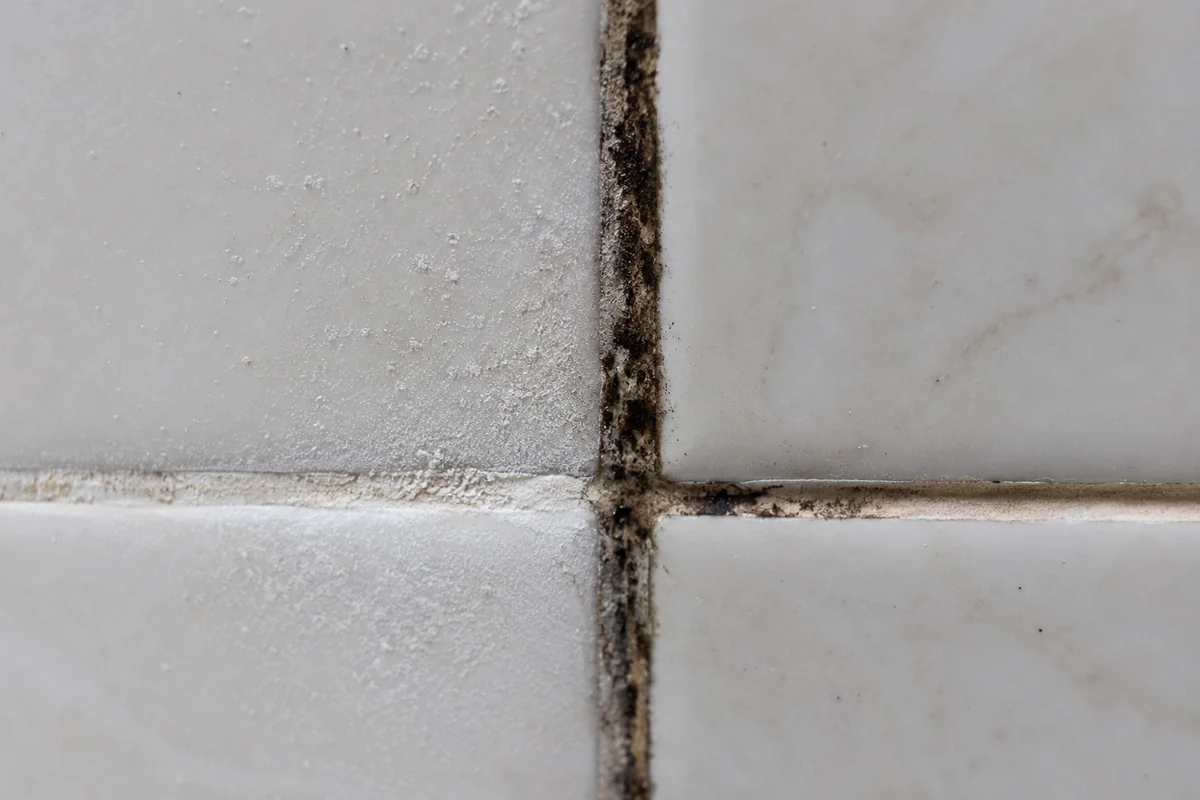
Visible growth and a persistent musty smell are the two signs that matter most, and together they answer the question on their own. Health agencies including the Environmental Protection Agency take the same practical line: if mold is visible, sampling is generally not necessary, because the recommended response is to clean it up and address the water problem regardless of what species it turns out to be.
This is the part people find surprising. Two dark patches on drywall might be different molds, but the safe cleanup is the same for both. You are not going to treat one species with a gentle wipe and another with a hazmat crew based on a name alone. The amount, the location, and the moisture behind it drive the response, not the label. If you are not even sure what you are looking at, the is this mold check walks you through the signs in a few taps before you consider spending on a test.
A smell without a visible source is a slightly different case, and it points toward the one situation where testing can genuinely help a homeowner: hidden growth. More on that below.
The situations where testing genuinely earns its place
Testing is oversold, but it is not useless. There are a handful of real scenarios where a result changes what you do, and in those cases it is money well spent:
- A dispute where you need evidence. If a landlord, seller, or insurer disagrees that a problem exists, an independent test creates a documented, third-party record you can point to.
- A real estate transaction. Buyers and sellers often want an arm's-length result to settle whether mold is present and how far it reaches, especially when a sale is in question.
- Unexplained symptoms with no visible source. When people in a home have persistent respiratory or allergy symptoms but nobody can find growth, air sampling can help locate a hidden problem.
- Clearance after professional remediation. Once a licensed contractor has finished a larger job, independent clearance testing confirms the work was effective before the space is used again.
- A sensitive occupant and no obvious cause. When someone at higher risk lives in the home and symptoms suggest mold but none is visible, testing can help decide whether to look deeper.
Notice the thread running through all of these. In each case the test result changes a decision, whether that decision is legal, financial, medical, or about reoccupying a space. That is the test worth paying for. Testing simply to name the mold on a wall you can already see is not.
Testing in a dispute or a home sale
Disputes are where documentation does real work. If a landlord denies there is a problem, or a seller insists the basement is dry, a written result from an independent tester carries weight that your own photos cannot. It separates the person judging the problem from the people with a stake in the outcome, which is exactly the kind of arm's-length evidence a court, an insurer, or a buyer wants to see.
For renters, a test is one piece of a larger record. Dated photos, written notice to the landlord, and a log of what happened usually matter as much as any lab result, and often more. The guides on documenting mold evidence and what to do when a landlord will not fix it cover how to build that record. For a home sale, mold is one of the issues that can stall a deal or reopen a negotiation, and the guide on mold when buying or selling a home walks through where testing fits into a transaction.
Testing when symptoms have no visible source
This is the strongest reason a homeowner might test without any dispute involved. When people in a home have ongoing symptoms that fit mold exposure, stuffy noses, itchy eyes, a scratchy throat, coughing, but a careful look turns up nothing, the growth may be hidden in a wall cavity, under flooring, or inside the heating and cooling system. Air sampling can compare indoor spore levels against outdoor baseline levels and help point toward a hidden source.
One useful clue before you test: mold-related symptoms often ease when people leave the space for a while and return when they come back. That timing pattern helps separate mold from a cold or ordinary seasonal allergies. The guide to mold exposure symptoms covers how they present and when it is worth seeing a doctor. If you are also wondering how worried to be about a dark patch you have found, is black mold dangerous gives a calm, cited read on the real risk.
Even here, testing is a diagnostic step, not the fix. A positive result tells you to keep looking and to correct the moisture. It does not substitute for finding and stopping the water.
Clearance testing after professional remediation
The clearest case for testing comes at the end of a job, not the beginning. After a licensed remediation contractor has removed affected materials and corrected the moisture on a larger job, independent clearance testing checks that the space meets accepted conditions again before people move back in. It is the difference between saying the work is done and being able to show it.
Clearance is best done by someone independent of the contractor who performed the removal, so the check stays at arm's length. An independent certified hygienist tests against the written scope set out at the start of the job. If you want to understand where this final step sits in the wider process, the overview of how mold remediation works covers each stage from assessment through clearance.
The types of mold tests and what each one shows
When testing is warranted, it is worth knowing the main methods, because they answer different questions. A qualified tester chooses among them based on what you actually need to find out.
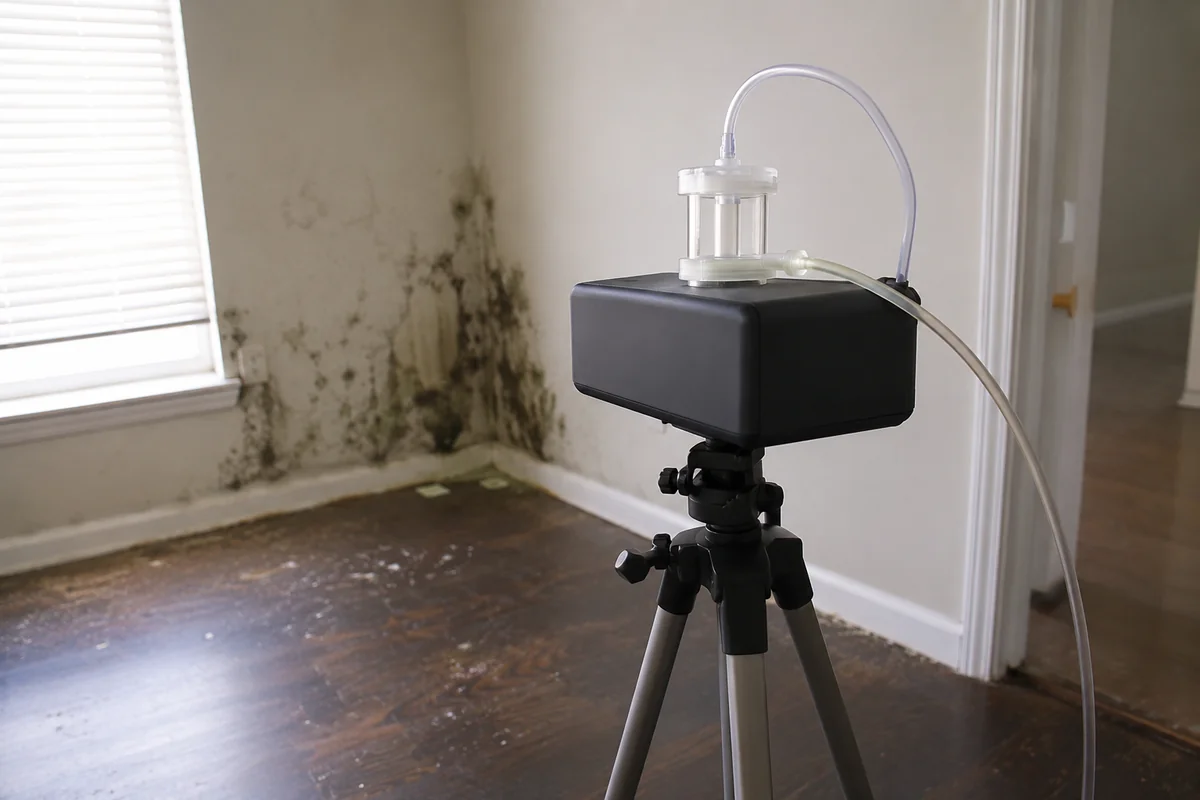
- Air sampling. A calibrated pump pulls a measured volume of air across a collection medium, and a lab counts the spores. Indoor levels are compared against an outdoor baseline taken the same day. This is the common method for hidden growth and for clearance, because it measures what is actually airborne in the space you breathe.
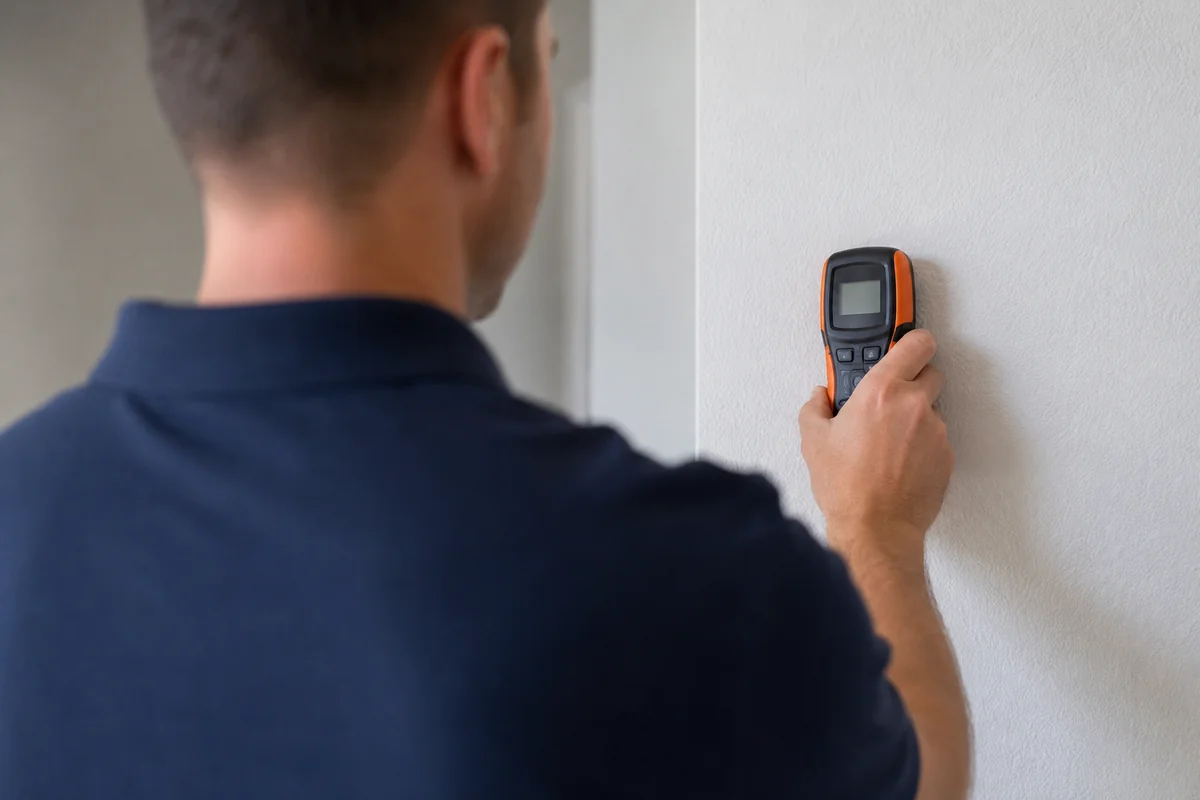
- Surface sampling. A swab, tape lift, or bulk sample is taken from a specific spot and examined under a microscope or cultured. This confirms whether a visible patch is mold and can identify what is on a particular surface, but it does not measure the air in the room.
- ERMI, the Environmental Relative Moldiness Index. A dust sample is analyzed with DNA methods against a panel of mold species to produce a single score. It was developed as a research tool, and many professionals caution against reading too much into a single ERMI number for deciding what to do in an ordinary home.
No single test is the right answer for every question. Air sampling suits hidden growth and clearance, surface sampling confirms what a specific patch is, and ERMI is a research-derived score that is easy to over-interpret. This is a large part of why who runs the test, and how they read it, matters as much as the method itself.
Why store-bought DIY kits usually mislead
The cheap settle-plate kits sold in hardware stores are the least useful option, and they routinely mislead the people who buy them. A plate left open on a counter will almost always grow something, because mold spores are present in essentially all indoor air. A plate that grows mold is not evidence of a problem; it is evidence that you live on Earth.
Those kits also share the weaknesses that make DIY testing unreliable in general:
- No outdoor baseline, so there is nothing to compare an indoor result against
- No calibrated, measured air volume, so a spore count means little
- No trained eye to interpret the result in the context of the building
- A strong incentive, for the labs tied to some mail-in kits, to report that something was found
The result is that a DIY kit tends to create anxiety without answering the question that prompted it. If the mold is visible, you did not need the kit. If it is hidden, the kit is not sensitive or controlled enough to find it reliably. Either way, the money is usually better spent elsewhere, on the cleanup or on a qualified tester when the situation genuinely calls for one.
Who should do the testing
When a situation genuinely warrants a test, the person to call is an independent certified hygienist or a licensed mold inspector, not the same firm that would carry out the removal. Independence is the point. A tester who does not also profit from the remediation has no reason to find a bigger problem than the one that exists, and that separation is exactly what gives the result its credibility in a dispute, a sale, or a clearance.
A qualified tester uses calibrated equipment, takes an outdoor baseline, reads the result against the specific building, and puts it in writing. That context is what a store kit cannot provide. This site does not perform testing or remediation; it connects you with licensed local professionals, and the guide to finding a licensed pro explains what to check before you hire one.
Not sure yet whether your situation even needs a professional at all? The do I need a pro check asks a few quick questions and gives you a plain read on whether this is a do-it-yourself job or one worth bringing someone in for, testing included.
What testing does not do
It helps to be clear about the limits, because testing is often sold as more than it is. A test does not remove mold, it does not fix the leak or the humidity feeding it, and there is no national number that declares a home safe or unsafe. There is no single legal threshold that a result is measured against, which is why context and an experienced reader matter so much.
A test is a snapshot of one moment, in one spot, under one set of conditions. It can confirm, document, or point toward a problem, all genuinely useful when a decision hinges on the result. It cannot substitute for the two steps that actually resolve mold: physically removing the growth and correcting the moisture that allowed it. Prevention lives in that same place, which is why the guide on how to prevent mold focuses on humidity and water rather than on testing.
Common questions about testing for mold
Should I test for mold if I can already see it?+
Usually no. If mold is visible, the recommended response is to remove it and fix the moisture regardless of the species, so a test does not change what you do. Spend the money on the cleanup instead, unless you need documented evidence for a dispute or a sale.
Are DIY mold test kits accurate?+
Generally no. Settle-plate kits will almost always grow something, because spores are present in nearly all indoor air, and they lack the outdoor baseline, calibrated air volume, and trained interpretation that make a result meaningful. They tend to create worry without answering the question.
What is the difference between air, surface, and ERMI tests?+
Air sampling measures spores in the air against an outdoor baseline and suits hidden growth and clearance. Surface sampling confirms what is on a specific patch. ERMI is a DNA-based dust score developed for research that many professionals caution against over-reading for everyday home decisions.
Who should perform a mold test?+
An independent certified hygienist or licensed mold inspector who does not also do the removal. That independence keeps the result credible, since the tester has no reason to find a larger problem than the one that exists.
Is there a safe level of mold a test can confirm?+
There is no universal legal number that defines a safe or unsafe level, so results are read in context against an outdoor baseline and the specific building rather than a single national threshold. This is one reason interpretation by a qualified person matters.
Do I need a test before a home sale?+
Sometimes. Mold can stall a deal or reopen a negotiation, and an independent result gives both sides an arm's-length answer. The guide on mold when buying or selling a home covers where testing fits into a transaction.
Not sure whether what you found is even mold?
A quick guided check tells you what you are likely looking at and the right next step before you spend on any test.
So the real question behind should I test for mold is what the result would change. When it settles a dispute, supports a home sale, points toward a hidden source behind unexplained symptoms, or confirms a completed remediation, testing by an independent certified hygienist is money well spent. When you can already see and smell the growth, that same money does more good removing the mold and fixing the moisture that fed it.
Not sure if it is even mold?
A quick guided check tells you what you are looking at and what to do next.